Skip to content

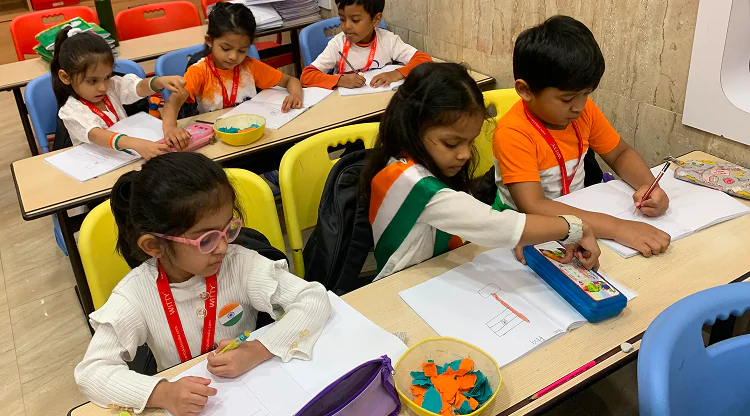
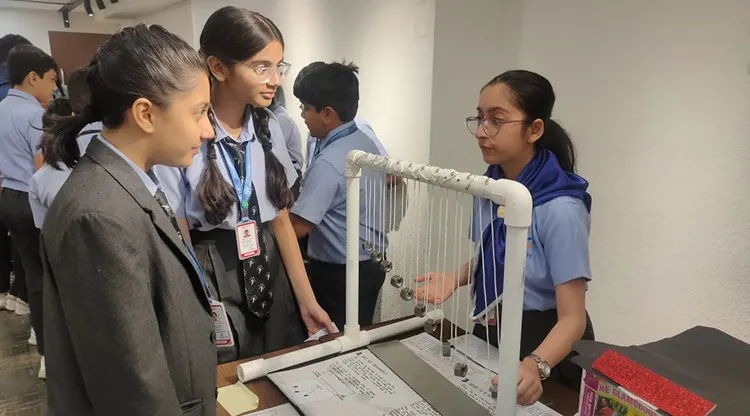
Imagine a classroom where students do more than memorise facts. They question, analyse, solve problems creatively, and make decisions based on reason rather than impulse. This is the power of critical thinking, a skill that transforms learning from passive absorption to active understanding. At Witty School, educators recognise the importance of cultivating critical thinking from the earliest years, helping children become thoughtful, independent learners. For parents exploring international board schools in Mumbai, understanding how critical thinking benefits students is essential for choosing a school that nurtures both academic and personal growth.
In this blog, we explore what critical thinking is, why it matters, its benefits, practical ways to develop it, and how it gives students a lifelong academic advantage.
Understanding Critical Thinking
Before we dive deeper, it is important to define what is critical thinking. Critical thinking is the ability to evaluate information objectively, identify assumptions, analyse evidence, and make reasoned decisions. It involves not just knowing the facts but understanding how to interpret and apply them effectively.
Example: A student tasked with a science project on climate change does not simply copy information from a textbook. Instead, they gather data from multiple sources, evaluate credibility, weigh conflicting evidence, and draw logical conclusions. This approach demonstrates critical thinking in action.
Critical thinking is more than a skill; it is a mindset that promotes curiosity, scepticism, and open-mindedness. Students who develop this mindset are better prepared to navigate complex academic challenges and real-life decisions.
Importance of Critical Thinking in Academics
The importance of critical thinking in education is immense. Beyond improving grades, it develops essential life skills:
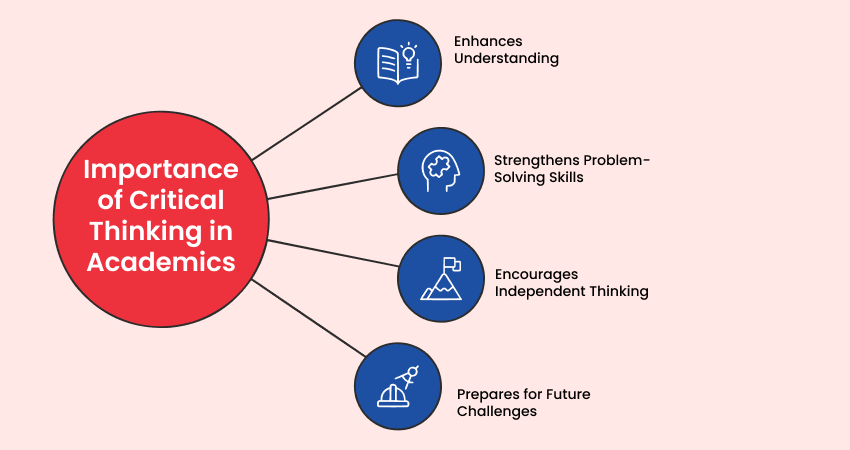
1. Enhances Understanding
Students who think critically comprehend concepts more deeply. They can connect ideas across subjects, identify patterns, and apply knowledge creatively.
Example: In history class, a student analysing the causes of the Industrial Revolution examines economic, social, and political factors instead of just memorising dates. This approach ensures lasting understanding and meaningful learning.
2. Strengthens Problem-Solving Skills
Critical thinking equips students to approach problems systematically. They learn to identify the root cause, evaluate solutions, and select the most effective course of action.
Example: In mathematics, a student facing a complex algebra problem breaks it into smaller steps, identifies patterns, and applies logical reasoning to efficiently find a solution.
3. Encourages Independent Thinking
Students develop confidence in their judgement, learning to question information and seek evidence rather than accepting answers at face value.
4. Prepares for Future Challenges
Education is not only about exams. Critical thinking equips students with skills to handle real-world situations, make informed choices, and solve problems effectively in their future careers and personal lives.
Benefits of Critical Thinking
The benefits of critical thinking extend beyond academics and affect personal growth, social skills, and professional readiness:
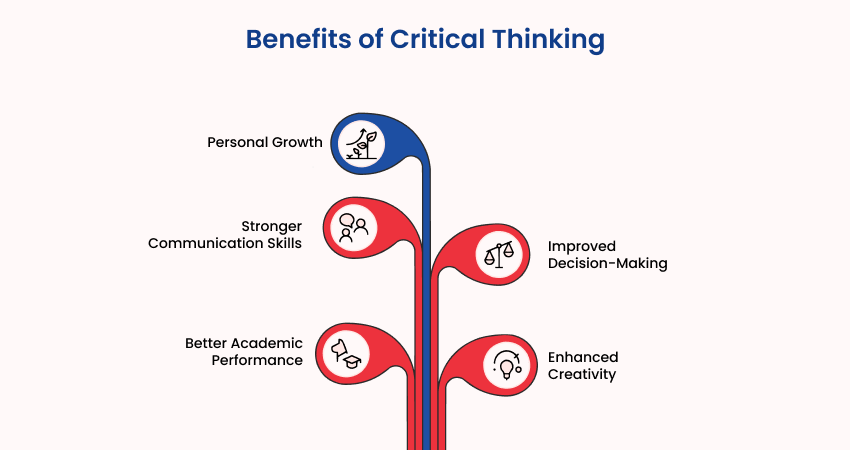
1. Better Academic Performance
Students with strong critical thinking skills excel in subjects that demand analysis, synthesis, and evaluation. They approach assignments strategically and consistently produce higher-quality work.
2. Enhanced Creativity
Critical thinking encourages innovative thinking. By analysing problems from multiple perspectives, students develop creative solutions.
Example: A student designing a school recycling initiative combines knowledge of science, design, and community engagement to create a practical and imaginative solution.
3. Stronger Communication Skills
Critical thinking enables students to articulate their ideas clearly, support arguments with evidence, and participate in constructive discussions.
4. Improved Decision-Making
From choosing study strategies to prioritising tasks, students apply reasoning to make effective, informed decisions.
5. Personal Growth
Critical thinking develops self-reflection, ethical reasoning, and empathy, helping students become thoughtful, socially aware individuals.
How to Improve Critical Thinking?
Parents and educators often ask how to improve critical thinking in children. Fortunately, it can be developed through consistent practice and guidance:
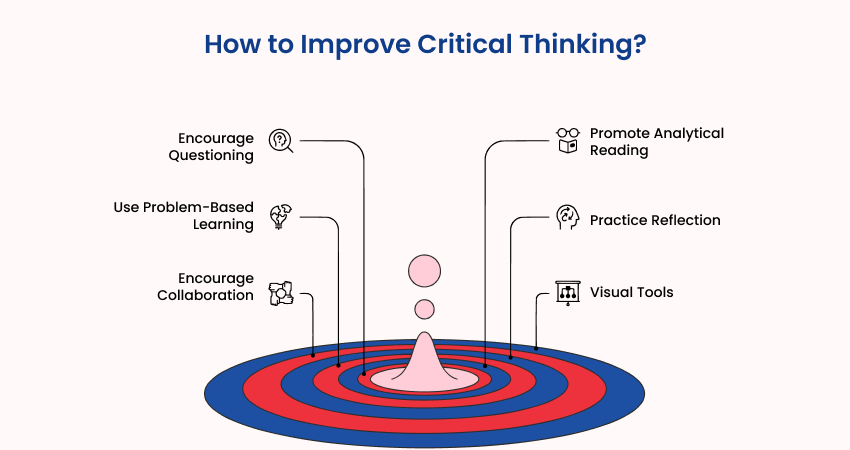
1. Encourage Questioning
Promote curiosity by allowing students to ask questions like “why”, “how”, and “what if”. Questioning assumptions strengthens analytical skills.
Example: In a literature class, ask why a character made a particular choice and what alternative actions could have changed the story’s outcome.
2. Promote Analytical Reading
Guide students to read critically by highlighting arguments, identifying supporting evidence, and evaluating source credibility.
3. Use Problem-Based Learning
Engage students in real-world problems requiring research, analysis, and logical solutions. This method reinforces reasoning skills.
4. Practice Reflection
Encourage students to reflect on their decisions and thought processes. Journaling or discussion helps evaluate reasoning and promotes self-awareness.
5. Encourage Collaboration
Group work exposes students to multiple viewpoints. Comparing perspectives enhances critical thinking and decision-making.
6. Visual Tools
Mind maps, diagrams, and flowcharts help students organise information, identify patterns, and make logical connections.
Example: A student planning a community garden uses a flowchart to map research, steps, and expected outcomes, ensuring a structured approach.
Advantages of Critical Thinking in Modern Education
The advantage of critical thinking is apparent in both academic success and holistic development. It equips students with skills to analyse, reason, and make informed choices. Schools like Witty School integrate critical thinking into daily learning through:
- Interactive Discussions: Students debate topics, present arguments, and consider alternative viewpoints.
- Project-Based Learning: Research-driven assignments that require planning, analysis, and evaluation.
- Case Studies: Real-world scenarios encourage problem-solving and ethical reasoning.
- Socratic Method: Teachers ask thought-provoking questions to deepen students’ understanding and reasoning.
These approaches ensure that students cultivate habits of mind, empowering them to excel academically and socially.
Real-Life Examples of Critical Thinking
Science Projects
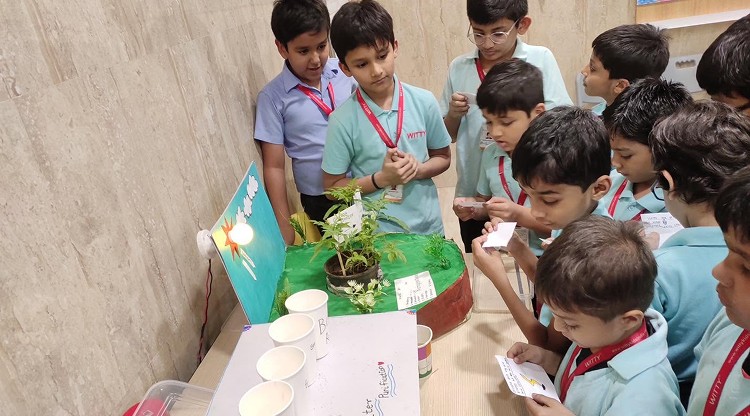
Students investigating water pollution analyse multiple sources, measure contaminant levels, and propose solutions. This involves reasoning, analysis, and evaluation.
Literature Analysis
Students examine themes, motives, and character choices critically, comparing perspectives to build a comprehensive understanding.
History and Social Studies
Analysing historical events from multiple viewpoints allows students to evaluate sources for bias and understand context, fostering empathy and analytical skills.
Everyday Decision-Making
Even routine choices, like managing study time or prioritising tasks, benefit from critical thinking. Students learn to weigh options and anticipate outcomes.
Critical Thinking in the Digital Age
With vast access to information online, critical thinking is more essential than ever. Students need to:
- Evaluate the credibility of websites and sources
- Identify misinformation and biases
- Make informed decisions in digital learning environments
Example: A student researching global warming examines scientific studies, government reports, and media articles, comparing evidence before drawing conclusions.
Role of Parents and Educators
Parents and teachers play a key role in fostering critical thinking:
- Modelling Reasoning: Demonstrate how to analyse problems and make decisions.
- Encouraging Exploration: Provide opportunities to experiment, hypothesise, and test ideas.
- Fostering Curiosity: Celebrate inquiry and discussion rather than just providing answers.
- Providing Constructive Feedback: Help students reflect on reasoning and improve thought processes.
Students in schools that emphasise these strategies, including international board schools in Mumbai, are more confident, independent, and academically capable.


Lifelong Advantages of Critical Thinking
The advantages of critical thinking extend well beyond school. Students who develop this skill become:
- Confident decision-makers
- Effective communicators
- Creative problem-solvers
- Socially aware and empathetic individuals
By understanding what critical thinking is, practising it regularly, and applying it in academic and personal contexts, students gain an enduring advantage. They are prepared to excel in exams, pursue higher education, and navigate complex life challenges with clarity and confidence.
Parents exploring top schools in Udaipur, Rajasthan, should prioritise institutions like Witty School that actively cultivate critical thinking. Such schools ensure children not only achieve academic success but also grow into thoughtful, capable individuals ready to thrive in a rapidly changing world.
Investing in critical thinking Education today equips students with skills that last a lifetime, helping them approach challenges with reason, creativity, and confidence.