Skip to content

As parents, we often worry about two things at the same time.
Is my child learning enough?
And is my child confident enough?
What many parents don’t realise is that one classroom practice quietly supports both: group discussion.
At Witty School, we see it every day. Children who talk through ideas learn more deeply, express themselves more clearly, and slowly grow into confident thinkers. Let’s break down why group discussions matter and how they can support your child’s learning journey.
What Is a Group Discussion?
A group discussion is not just children talking randomly.
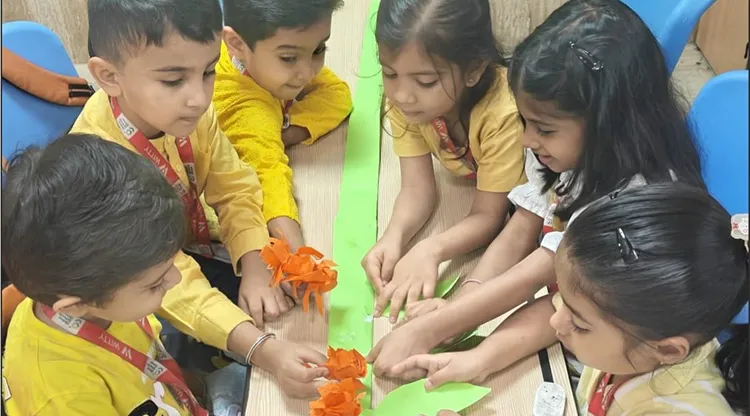
It is a guided conversation where students:
- Share ideas
- Listen to others
- Ask questions
- Learn to disagree respectfully
This can happen in the classroom, during project work, or while analysing a story or real-world problem.
Unlike traditional lectures, group discussions encourage active participation, turning passive learning into meaningful thinking. Progressive institutions, including the best international schools in Borivali, integrate this approach into daily learning to make education engaging and effective.
How Do Group Discussions Improve Learning?
1. Children Understand Concepts Better
One of the biggest advantages is conceptual clarity. When students explain ideas in their own words, they process information actively.
This is why children often remember topics longer when they discuss them with peers compared to reading notes or listening to a lecture.
Parents exploring school admissions in Mumbai often notice that students from discussion-based classrooms can articulate concepts clearly, ask insightful questions, and apply learning in real-life scenarios.
2. Confidence That Lasts
Not every child is comfortable raising their hand in front of the entire class. Group discussions create a smaller, safer space where children feel heard.
Even quieter students gradually learn to:
- Share their thoughts
- Ask questions
- Express themselves confidently
At Witty School, we have seen children who were hesitant speakers become confident communicators simply because they were given the space to talk without fear of being wrong.
3. Critical Thinking and Problem Solving
When children hear multiple perspectives, they learn to think critically.
Group discussions help students:
- Analyse ideas objectively
- Support their opinions with reasoning
- Respectfully agree or disagree
This is a skill that becomes invaluable in higher education, competitive exams, and the professional world. Modern schools, such as top schools in Udaipur, Rajasthan, use discussion-based learning to nurture this ability early.
4. Listening and Social Skills
Listening is often overlooked, but in group discussions, it is just as important as speaking.
Children learn to:
- Hear others without interrupting
- Respect differing viewpoints
- Take turns and collaborate
These skills shape how children behave at home, in friendships, and later in workplaces. Discussions teach empathy and patience, skills that matter as much as academic knowledge.
Group Discussions and Real-World Readiness
Group discussions are more than a classroom activity. They are training for life.
Think about adult life. Meetings, team projects, negotiations, and problem-solving require clear communication and collaboration. Children who practise discussions early are better prepared to:
- Express ideas clearly
- Work in teams
- Make decisions thoughtfully
- Adapt to new situations
This real-world readiness is why Witty School emphasises discussion-based learning as part of a holistic approach.
How Can Parents Support Discussion Skills at Home?
You don’t need a classroom to encourage discussion skills. Try these simple tips:
- Ask open-ended questions: Instead of yes/no queries, ask “Why do you think that?”
- Encourage explanation: Let your child explain topics in their own words
- Create mini-family discussions: Discuss news, stories, or decisions together
- Model respectful debate: Show that disagreement is healthy and respectful
These small habits reinforce what schools practise through structured discussions, giving children extra confidence and reasoning practice.
What Should Parents Look for in Schools?
Not all schools use group discussions effectively. During school admissions, ask:
- How often do students participate in discussions?
- Are teachers trained to guide conversations thoughtfully?
- How are quieter children encouraged to speak?
- Are discussions integrated with the curriculum, not just an activity?
At Witty School, group discussions are structured, guided, and inclusive, ensuring every child benefits.
Key Takeaways for Parents
Group discussions may look simple, but their impact is profound. They help children:
- Understand concepts more deeply
- Build confidence in speaking and reasoning
- Develop critical thinking and problem-solving skills
- Learn social skills like listening, empathy, and collaboration
As parents, choosing a school that values discussion-based learning is one of the best ways to support your child’s overall development.
This is learning that stays with them long after they leave the classroom. Bookmark this guide: it is a simple checklist to ensure your child benefits from learning that is active, engaging, and life-ready.