Skip to content

Key Takeaways
- The Cambridge curriculum is an international education system for learners ages five to 19 that focuses on comprehension rather than rote learning.
- The four stages of the course are Primary, Lower Secondary, IGCSE, and AS & A Level.
- Learners get exposed to numerous subjects to keep their options open till the time they need to specialise.
- The pedagogy lays emphasis on higher-order questions that promote analytical thinking.
- The number of Cambridge schools in India has more than doubled in the past decade, rising from around 398 to over 820.
Every parent wants their child to grow up learning lessons they can apply in the real world rather than just sitting down for tests. This is exactly what the Cambridge curriculum sets to achieve. The article describes this curriculum and explains why it is gaining so much popularity among Indian parents.
What Is the Cambridge Curriculum?
The Cambridge curriculum is an international education program developed by the Cambridge Assessment International Education, which is a department of the University of Cambridge, England. This curriculum is designed for students aged between 5 and 19 years old.
Unlike other boards, the Cambridge curriculum does not emphasize the need for rote learning but instead concentrates on learning the concepts. The students are taught to develop the ability to question, hypothesize, test, experiment, and solve problems.
According to the Cambridge International, this educational framework is followed by more than 10,000 schools across 160+ countries. It aims to provide more than a million students with a common educational framework.
Since the curriculum is followed worldwide, this educational framework provides a student with flexibility and allows them to relocate to another country without any interruption in their education. Witty International School’s Cambridge curriculum guide explains this in more detail.
How Is the Cambridge Syllabus Structured?
The Cambridge syllabus is broken into four clear stages. Each stage builds on the one before it. This makes the transition from one stage to the next feel smooth, not sudden.
| Stage | Age Group | Focus |
| Cambridge Primary | 5 to 11 years | Foundational literacy, numeracy, and early problem-solving |
| Cambridge Lower Secondary | 11 to 14 years | Subject depth increases, and critical thinking begins |
| Cambridge IGCSE | 14 to 16 years | Broad subject choice, exam-style assessments |
| Cambridge AS and A Level | 16 to 19 years | Deep specialisation in chosen subjects |
By the time a child finishes school, they’ve been guided from broad interests towards more focused, expertise-like learning. One reason why the syllabus is effective for young learners is that it’s a step-by-step progression, none of which years feel like a sudden jump in difficulty.
What Subjects Are Taught at Cambridge?
The subjects at Cambridge cover a wide range, not just science and maths. Students can choose from:
- Sciences, such as Physics, Chemistry, and Biology
- Mathematics and Further Mathematics
- Humanities, such as History, Geography, and Economics
- Languages, including English and other global languages
- Creative subjects, such as Art, Design, and Music
- Business and Computer Science
This broad choice means that students are not led down a particular path too soon. Children can look at a wide range of options prior to choosing their specialism at a later stage. Subject choice is broadened even further at IGCSE and only narrows again at A Level, giving children more opportunity to find their true interest.
Why Does the Importance of Curriculum Matter for Skill-Building?
The importance of curriculum goes far beyond exam results. A well-built curriculum shapes how a child thinks, not just what they know.
A strong curriculum should:
- Build confidence in solving new, unseen problems
- Teach students how to research and reason
- Prepare students for global universities and careers
- Support all-round growth, not just academic scores
Cambridge was designed with all of these goals in mind. That is why so many schools and parents trust it, both in India and around the world.
How does Cambridge promote critical thinking in students?
Cambridge encourages developing critical thinking throughout all stages of learning. Instead of simple recall questions aimed at testing how much the students know, Cambridge promotes thinking and reasoning-based questions.
For instance, in a geography lesson, instead of asking, ‘What is deforestation?’, the Cambridge method would ask, ‘Why does deforestation occur, and what can be done to prevent it?’. The latter question requires deeper thinking and reasoning than simply recalling the definition of deforestation. These skills then become embedded in the student naturally as they progress through their studies at Cambridge. This will prove beneficial to the children, as they will not blindly accept information; they will instead question it and apply their own level of critical thinking. This will become increasingly useful to the children as they grow older and encounter new topics that they are not familiar with, whether that be in their career or personal life.
Why Are More Indian Parents Choosing Cambridge?
Indian interest in the Cambridge curriculum has grown sharply in recent years. The numbers tell a clear story:
- Cambridge-affiliated schools in India grew from around 398 in 2015-16 to over 820 today, more than doubling in less than a decade, as reported by Careers360.
- More than half of Cambridge learners from India go on to study at Indian universities after school, followed by the US, UK, Singapore, and Australia, per the same Careers360 report.
- India’s overall school system now serves over 24.8 crore students across 14.72 lakh schools, as per the Economic Survey 2024-25.
These statistics reflect that Cambridge is no longer a niche choice but mainstream among Indian families who are looking for international education standards without taking their children abroad. The demand is particularly acute in the southern part of the country, where the trend is spreading from metro areas to smaller cities and towns.
Why Choose Witty for Cambridge Education?
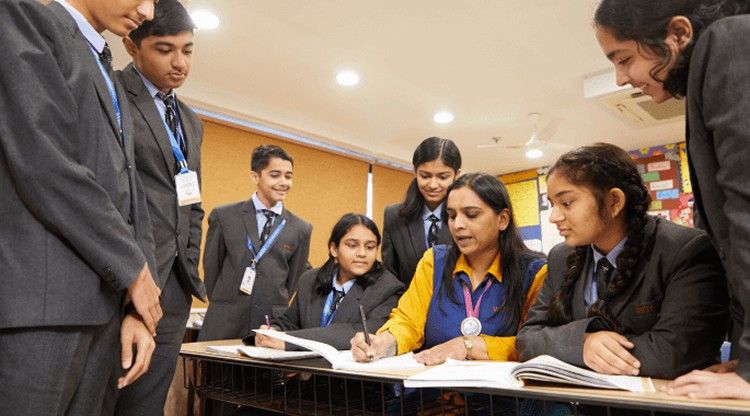
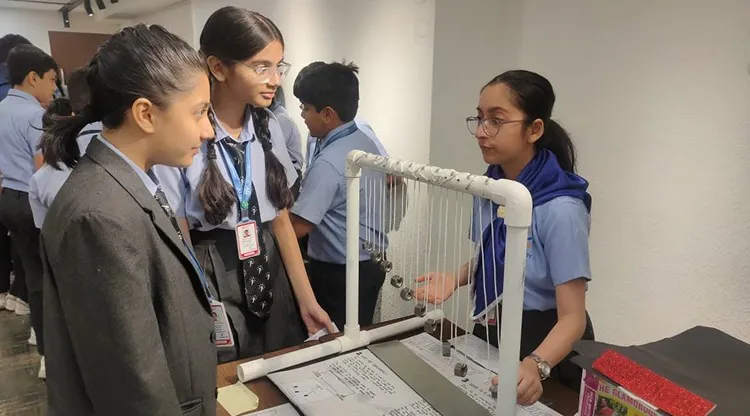
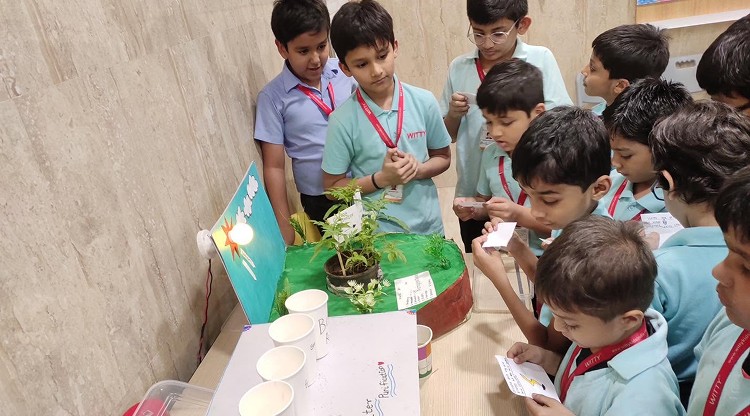
Witty International School provides the Cambridge curriculum through experienced teachers and a hands-on, activity-led classroom style. Lessons are taught using real-world problems as opposed to the traditional textbook method.
Students are encouraged to ask more thoughtful questions, develop stronger arguments, and think for themselves at each stage, which fits in perfectly with what the Cambridge framework sets out to achieve.
Parents comparing curricula can also read Witty’s guide on IB vs Cambridge or the complete Cambridge curriculum guide to understand which path suits their child best. Those exploring campuses can visit Witty’s Cambridge Board Schools in Mumbai page for more details.
Conclusion
The Cambridge course of study is designed to stimulate the students’ ability to think critically, question, and solve problems in a way that will help them in all areas of life, not only academics. This curriculum is perfect for any parent who wants their child to become a confident and independent learner.
Ready to explore this path for your child? Enquire with Witty International School today and discover how the Cambridge curriculum can shape your child’s future.