Skip to content


Think back to your child’s first word, their first doodle, or that moment they proudly said, “I did it!” Those little moments aren’t just adorable; they’re powerful milestones of growth. Every giggle, question, and experiment is shaping how your child learns and sees the world.
That’s exactly what early childhood education (ECE) is about: nurturing this natural curiosity with care and purpose. It’s not about rushing into academics; it’s about helping children discover, explore, and build confidence in the most joyful way.
What Is Early Childhood Education?
So, what is early childhood education exactly? It refers to the structured and unstructured learning experiences that occur from birth to around age 8. It’s not limited to alphabets or numbers; it’s about developing social, emotional, cognitive, and motor skills that prepare children for school and life.
Theories by Jean Piaget and Lev Vygotsky highlight that early learning is most effective through play, exploration, and social interaction. In India, the National Education Policy (NEP) 2020 recognises this phase as the “Foundational Stage”, emphasising holistic learning through activity-based and experiential methods.
If you’re considering admission for kindergarten, understanding this foundation can help you make the best decision for your child’s early years.
The Importance of Early Childhood Education
The importance of early childhood education lies in its role in shaping lifelong development. It’s during these years that children build curiosity, empathy, and the ability to learn independently.
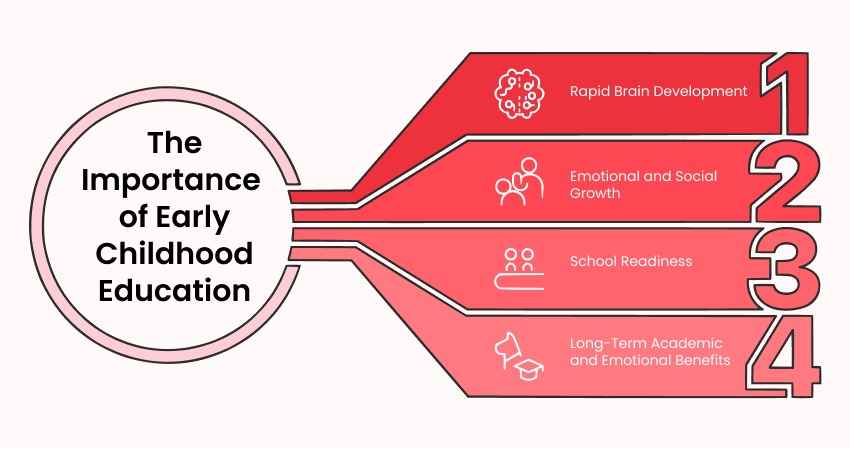
Here’s why it matters:
1. Rapid Brain Development
Studies by UNICEF India and NCERT show that over 85–90% of brain growth occurs before the age of five. The neural connections formed during this time influence intelligence, emotional balance, and future learning abilities.
2. Emotional and Social Growth
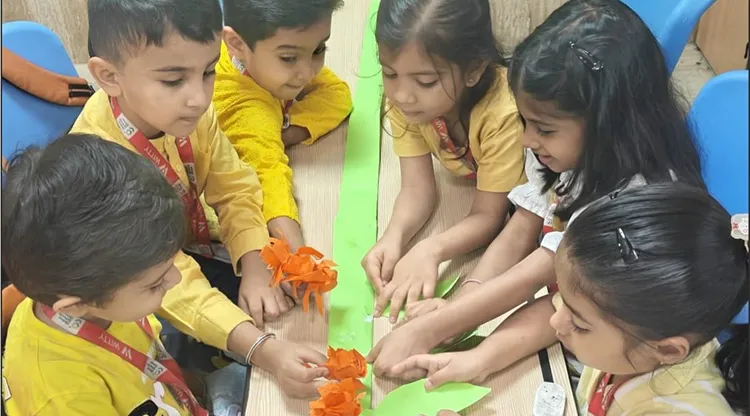
According to Vygotsky’s Social Development Theory, children learn best in social contexts. Group play, storytelling, and peer interaction help them develop empathy, teamwork, and emotional regulation.
3. School Readiness
Early education prepares children for formal schooling. It builds attention span, problem-solving ability, and confidence, key factors when transitioning to structured environments such as good schools in Mumbai or the best schools in Goregaon.
4. Long-Term Academic and Emotional Benefits
Children who experience quality early education tend to perform better academically, display stronger social skills, and are more resilient. The Tata Institute of Social Sciences (TISS) has found a direct link between early learning and long-term educational success in India.
Benefits of Early Childhood Education
Let’s take a closer look at the significant benefits of early childhood education:
- Cognitive Skills: Enhances reasoning, problem-solving, and memory.
- Language Development: Encourages clear communication and vocabulary expansion.
- Physical Growth: Promotes coordination through art, dance, and play.
- Social Confidence: Builds teamwork and cooperation.
- Emotional Intelligence: Helps children understand and manage their emotions.
Simply put, early education develops the “whole child”, preparing them not just for exams but for life.
How to Improve Early Childhood Education?
The question often arises: How can early childhood education in India be improved?
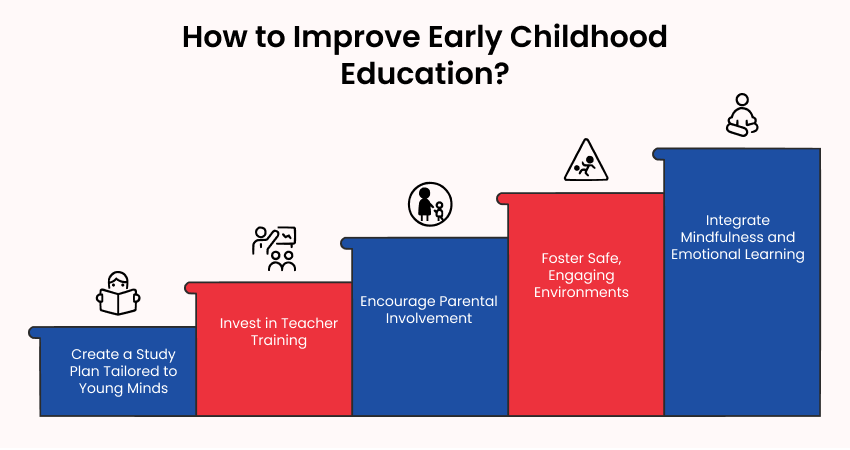
While awareness is growing, consistent quality and accessibility remain challenges. Here’s how we can bridge that gap:
1. Create a Study Plan Tailored to Young Minds
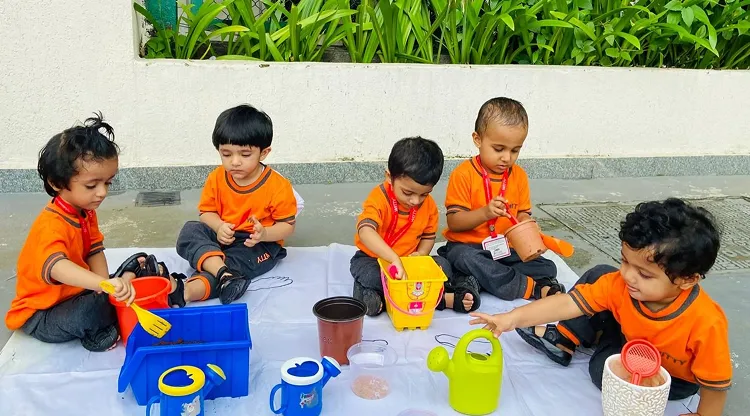
Instead of rigid syllabi, educators should create a study plan that blends structured learning with play. Storytelling, music, and discovery-based activities stimulate curiosity and creativity. For example, teaching math through cooking or nature walks makes learning real and relatable.
2. Invest in Teacher Training
Teachers are the backbone of any early education programme. Training them in child psychology, classroom management, and inclusive education can transform how children experience learning.
3. Encourage Parental Involvement
Parents play a key role in reinforcing what children learn at school. Reading together, playing word games, or simply having conversations can strengthen neural connections and learning habits.
4. Foster Safe, Engaging Environments
Children learn best when they feel safe and stimulated. Colourful classrooms, soft play areas, and outdoor exploration zones build curiosity and independence.
5. Integrate Mindfulness and Emotional Learning
Simple mindfulness practices, such as breathing exercises, gratitude moments, or reflective storytelling, help children develop focus and calmness early on. Research from NCERT and UNICEF India shows that emotional regulation supports academic performance later in life.
Theoretical Foundations Behind Early Learning
The principles of early childhood education aren’t arbitrary; they’re rooted in decades of research and observation.
Jean Piaget’s Cognitive Development Theory
Piaget proposed that children move through stages of cognitive growth, learning through exploration and active discovery. Early education programmes use hands-on experiences to help children understand cause and effect.
Lev Vygotsky’s Zone of Proximal Development (ZPD)
Vygotsky emphasised that children learn best with the support of adults or peers who guide them slightly beyond their current abilities, a concept known as “scaffolding”. Teachers and parents together create these growth opportunities.
Erik Erikson’s Psychosocial Theory
Between ages three and six, children experience the stage of initiative vs. guilt. Supportive environments that reward curiosity help them build confidence and independence.
Howard Gardner’s Multiple Intelligences
Gardner’s theory reminds us that intelligence isn’t one-dimensional. Some children learn best through words, while others learn best through music, art, or movement. Recognising these differences helps educators tailor lessons effectively.
Challenges in India’s Early Education Landscape
Despite progress, early childhood education in India still faces hurdles:
- Unequal Access: Rural areas and low-income families often lack quality preschool options.
- Infrastructure Issues: Not all schools have age-appropriate classrooms and play areas.
- Overemphasis on Academics: Early education sometimes shifts prematurely toward rote learning, which can stifle creativity.
- Teacher Shortages: Many preschools struggle with underqualified or overburdened staff.
Addressing these challenges means investing in teacher training, policy reform, and community awareness. Encouragingly, the NEP 2020 is already driving this transformation by integrating early education into the formal school system.
The Parents’ Role: Learning Starts at Home
Parents often ask, “What can I do to help my child learn better?” The answer lies in creating a nurturing environment at home.
- Read Daily: Builds vocabulary and imagination.
- Encourage Questions: Promotes curiosity and critical thinking.
- Play Together: Strengthens emotional bonding and creativity.
- Model Behaviour: Children learn empathy, discipline, and patience by observing adults.
- Follow Routines: Helps develop time management and a sense of stability.
These small, consistent efforts make a big difference in a child’s early learning journey.
Real-World Application: Choosing the Right School
Once you understand the principles of early learning, the next step is choosing where your child can thrive. Parents in Mumbai can explore good schools in Mumbai that combine play-based and experiential learning.
If you’re in the western suburbs, the best schools in Goregaon offer programmes aligned with the NEP 2020 vision, blending academics with emotional and social development.
When selecting a school, look for:
- Child-centred teaching methods
- Play-based curriculum
- Qualified teachers
- Safe and stimulating infrastructure
- Opportunities for parent engagement
These elements ensure that your child receives a balanced education that nurtures both heart and mind.


A Strong Start for a Bright Future
Early childhood education isn’t just about preparing children for school; it’s about preparing them for life. The importance of early childhood education lies in how it shapes curiosity, compassion, and confidence, qualities that define successful learners and empathetic humans.
If you’re planning kindergarten admission, remember. These first few years are a once-in-a-lifetime opportunity to build the foundation for your child’s emotional, intellectual, and social well-being.
Invest in a school that values play, inquiry, and growth, because every question, every story, and every giggle adds up to something extraordinary.