Skip to content

What Is Educational Equity and Why Does It Matter?
As a parent, you want the best education for your child. But have you ever stopped to wonder whether every child in India, regardless of where they live or what their family earns, gets the same quality of schooling? That is precisely what educational equity is all about, and it is a conversation every parent, teacher, and school needs to have.
According to the ASER 2024 report, India has achieved near-universal school enrolment for children aged 6 to 14, with over 98% attending school. Yet, only 23.4% of Grade 3 students can read a Grade 2-level text, and merely 33.7% can perform basic subtraction. Enrolment and actual learning are two very different things, and that gap is at the heart of why equity in education matters so deeply.
What Does Equity in Education Mean?
Simply put, equity in education means every child receives the support they genuinely need to learn and grow, not just the same resources as everyone else. It recognises that students arrive at school with different backgrounds, abilities, and challenges. A child from a rural village and a child from an urban metro both deserve a real shot at quality education, even if what they need to get there looks different.
Equity is distinct from equality. Equality says: give everyone the same textbook. Equity says, ‘Make sure every child can actually read it.’
What is the Difference Between Equity and Equality in Education?
| Equality | Equity |
| Same resources for all students | Resources tailored to individual need |
| Ignores different starting points | Acknowledges different starting points |
| May leave disadvantaged students behind | Actively closes the gap for all learners |
Why Does Equity in Education Matter in India?
India is a country of incredible diversity, and that diversity plays out sharply in its classrooms. The PLFS 2023-24 shows that national literacy stands at 80.9%, but urban literacy is at 90% while rural literacy lags behind at 77%. For girls, the gap is still wider: 88% for men and 81% for women.
Equity in education matters because it directly affects whether a child can break the cycle of poverty. When students from disadvantaged backgrounds get the right support, their academic outcomes improve, and so do the outcomes of the entire class. Research consistently shows that classrooms with smaller achievement gaps produce better overall results for everyone.
Schools like the best CBSE schools in Udaipur and ICSE schools in Mumbai are increasingly adopting inclusive, equity-focused frameworks to ensure every enrolled child truly learns, regardless of their background.
How Does Witty Schools Practise Equity in Education?
At Witty Schools, equity in education shapes every decision, from how teachers are trained to how classrooms are structured. Here is how we put it into practice:
- Personalised learning paths: We meet every child where they are, adapting teaching methods to individual pace and learning style.
- Teacher development: Our educators receive ongoing training in inclusive practices and cultural competence.
- Family engagement: We keep parents informed and involved, because equity at school works best when it is mirrored at home.
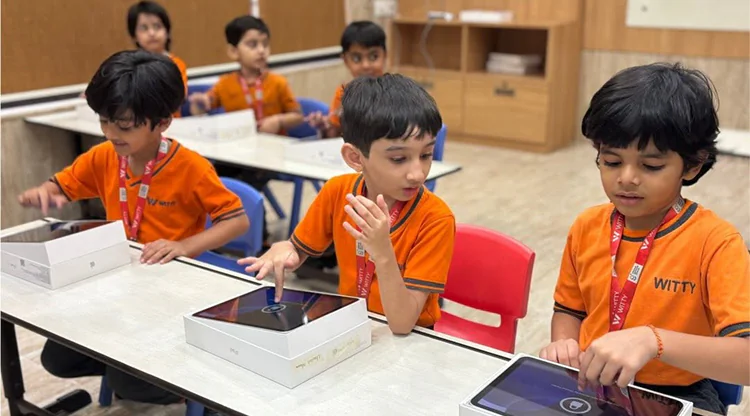
- Accessible resources: Every student has access to quality learning tools, from digital content to physical materials.


Where Does India Stand? Key Statistics on Educational Equity
| Indicator | Data |
| School enrolment (6-14 yrs) – ASER 2024 | Over 98% enrolled |
| Grade 3 students reading at Grade 2 level – ASER 2024 | Only 23.4% |
| Rural internet access vs urban – TRAI, 2023 | 37% rural vs 67% urban |
| National literacy rate – PLFS 2023-24 | 80.9% overall; 90% urban, 77% rural |
| Rural digital literacy – NSS, 2022 | 24% rural vs 56% urban |
Frequently Asked Questions
1. What is the difference between educational equity and educational equality?
Equality gives every student the same thing. Equity in education gives every student what they personally need. Equality assumes all students start from the same place; equity recognises they do not.
2. Why should parents care about educational equity?
When schools practise equity, all children, including yours, benefit. Research shows that reducing achievement gaps raises overall classroom performance and builds more empathetic, collaborative learners.
3. How do schools measure equity in education?
Schools track indicators such as learning outcomes across different student groups, attendance rates, access to resources, and participation in extracurricular activities. Reports like ASER offer a national-level view of how Indian students are actually learning, not just how many are enrolled.
4. What role do parents play in supporting equity in education?
Parents are essential partners. Staying engaged with your child’s school, communicating openly about their needs, and advocating for inclusive policies all contribute to a more equitable learning environment at a local level.
Why Witty Schools is Committed to Equity in Education
The numbers above tell a clear story: enrolment alone is not enough. True progress means every child is learning, growing, and being seen. At Witty Schools, equity in education is a lived commitment, not a talking point. Whether your child needs extra support or greater challenge, our goal is the same: to give them precisely what they need to thrive.
If you are looking for a school that places your child’s individual journey at the centre of everything it does, we would love to welcome your family to the Witty Schools community. Reach us at www.wittyschool.org