Skip to content


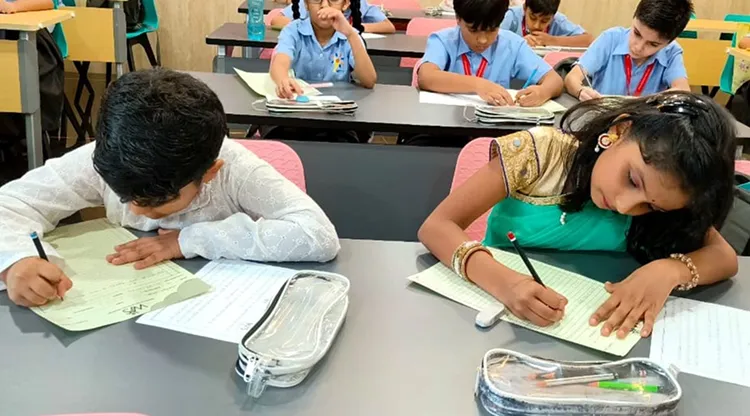
Have you ever seen a child ask, ‘Why is the sky blue?’ and keep asking until they get a satisfying answer? That curiosity is the heart of what inquiry-based learning is. Instead of simply telling students facts, schools encourage them to ask questions, investigate, explore and discover answers themselves.
The inquiry-based learning definition is simple: it is a student-centred approach where learning begins with questions, problems or scenarios rather than direct instruction. In other words, children learn by exploring, thinking and reflecting, not just memorising.
Why is inquiry-based learning important in today’s education?
According to the Ministry of Education’s Unified District Information System for Education (UDISE+) 2024-25 report, India has more than 26 crore school students, highlighting the scale at which effective learning methods matter. With such a vast student population, education systems must go beyond textbook recall.
Inquiry-based learning helps students:
- Develop critical thinking
- Improve problem-solving skills
- Build communication confidence
- Strengthen collaboration
- Become independent learners
It aligns closely with India’s National Education Policy (NEP) 2020; which promotes experiential and competency-based learning.
How Does Inquiry-Based Learning Work in Classrooms?
Imagine a science lesson on plants.
Traditional method: The teacher explains photosynthesis.
Inquiry method: The teacher asks, “Why do plants kept in dark rooms look different?”
Students will:
- Form hypotheses
- Conduct small experiments
- Observe outcomes
- Discuss results
- Present findings
That’s inquiry-based learning in action. Instead of passively listening, students actively participate in discovering knowledge.
Which Are Common Inquiry-Based Learning Examples?
Here are practical inquiry-based learning examples you may already see in progressive classrooms:
| Subject | Inquiry Activity Example |
| Science | Investigating water filtration methods |
| Mathematics | Exploring patterns in number sequences |
| Social Studies | Debating local civic issues |
| Language | Analysing character motivations in stories |
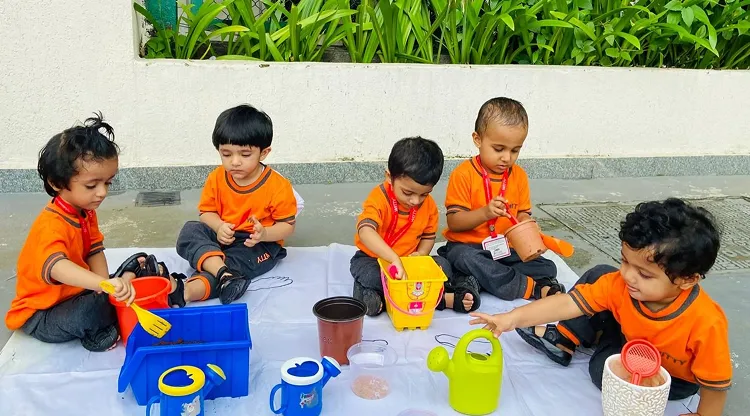
| Early Years | Observing how seeds grow over time |
In early childhood learning stages like nursery school admission, children naturally explore through play. That curiosity forms the foundation of inquiry learning.
When Should Inquiry-Based Learning Begin?
The short answer to this is ‘as early as possible’.
In fact, foundational learning is critical. According to ASER 2023, strengthening foundational literacy and numeracy remains a key priority in India. Inquiry-based strategies at the pre-primary and primary levels help bridge comprehension gaps.
This is why many of the best playschools in Mumbai integrate exploration corners, storytelling circles and hands-on discovery spaces.
Who Benefits Most from Inquiry-Based Learning?
Honestly, it benefits every child, but especially for
- Curious learners who love asking why
- Children who learn better through doing and exploring
- Students who struggle with rote memorisation
- Future leaders who need analytical thinking
Imagine your child confidently presenting research findings in front of classmates. That confidence does not come from memorising notes; it comes from understanding deeply.
How is inquiry-based learning different from traditional learning?
Let us compare clearly.
| Traditional Learning | Inquiry-Based Learning |
| Teacher-led lectures | Student-led exploration |
| Memorisation focused | Question-driven |
| One correct answer only | Multiple perspectives explored |
| Passive listening | Active investigation |
This approach transforms classrooms into thinking hubs.
Why Do Parents Prefer Inquiry-Based Schools?
Parents today want more than marks. They want-
- Communication skills
- Leadership qualities
- Creativity
- Emotional intelligence
The National Education Policy 2020 emphasises experiential learning for holistic development. Inquiry-based classrooms directly support this vision.
How Does Inquiry-Based Learning Build Life Skills?
It strengthens.
- Research skills
- Analytical reasoning
- Teamwork
- Public speaking
- Decision-making
When students investigate real-world scenarios, they connect theory to life.
Where Do Witty Schools Stand on Inquiry-Based Learning?
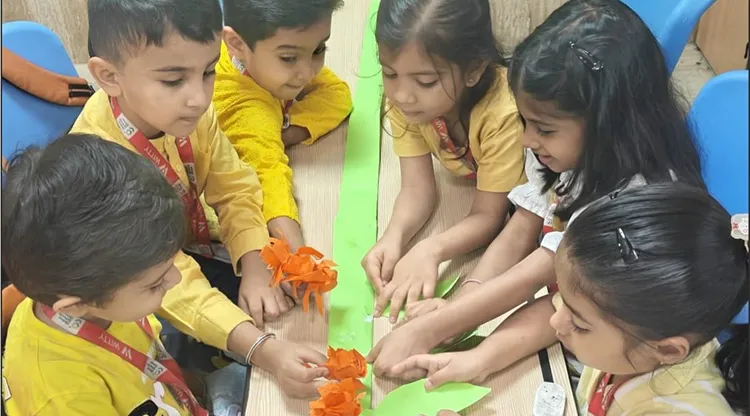
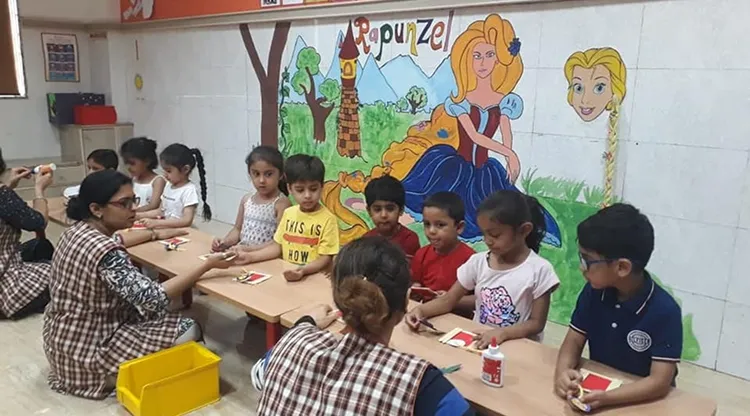
At Witty Schools, inquiry is not an occasional activity; it is a philosophy. From early years through higher grades, learning is designed to encourage questioning, collaboration and critical thinking.
Here’s how Witty Schools implement it:
- Experiential learning modules
- Interactive digital classrooms
- Project-based assessments
- Leadership and life-skill integration
- Global exposure through diverse activities
If you are exploring the best schools in Goregaon, it is worth observing how classrooms encourage dialogue rather than passive listening. Witty Schools combine strong academic frameworks with inquiry-driven pedagogy, ensuring students are not only ready for exams, but also for the future.
Final Thoughts
So next time your child asks, “Why does this happen?”, pause before giving the answer. That question is the starting point of powerful learning that nurtures curiosity, encourages exploration and builds confident thinkers.
As parents, understanding what inquiry-based learning is will help to make informed choices. The future belongs to children who know how to ask the right questions and explore their own answers. Let your child be among them with Witty Schools!
FAQs
1. What is inquiry-based learning?
It is a student-centred approach where learning begins with questions and investigation rather than direct instruction.
2. Why is inquiry-based learning important?
It develops critical thinking, independence and real-world problem-solving skills.
3. How is inquiry-based learning different from traditional teaching?
Traditional teaching focuses on lectures and memorisation, while inquiry learning emphasises exploration and understanding.
4. Can inquiry-based learning work for nursery students?
Yes. Young children naturally explore through play, making it ideal during nursery school admission stages.
5. Are the best playschools in Mumbai using inquiry methods?
Many progressive early years institutions are integrating inquiry-driven play and experiential learning models.