Skip to content

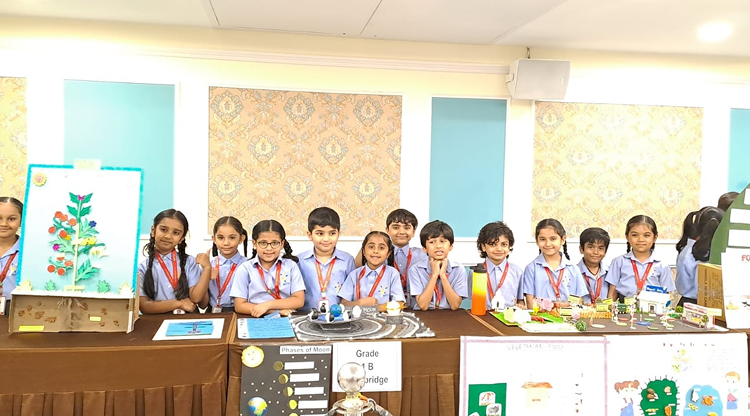
As a parent, choosing the right school board for your child is one of the most important decisions you will ever make. You want your child to grow up confident, curious, and ready for a world that is changing rapidly. The Cambridge curriculum has been quietly transforming how thousands of Indian families think about education, and for good reason. Let us walk you through what makes it stand apart.
What is the Cambridge Curriculum?
The Cambridge curriculum, developed by Cambridge Assessment International Education (CAIE) at the University of Cambridge, UK, is a globally recognised educational framework for learners from early years through to pre-university level. It is structured across four progressive stages: Cambridge Primary (ages 5 to 11), Cambridge Lower Secondary (ages 11 to 14), Cambridge Upper Secondary or IGCSE (ages 14 to 16), and Cambridge Advanced or A Levels (ages 16 to 19).
The Cambridge education system is built on active learning, inquiry, and real-world problem-solving. Rather than rote memorisation, students are encouraged to think critically, collaborate, and apply their knowledge across contexts.
How Does the Cambridge Pathway Work?
| Stage | Age Group | Programme | Focus |
| Primary | Ages 5 to 11 | Cambridge Primary | Core subjects, curiosity-based learning |
| Lower Secondary | Ages 11 to 14 | Cambridge Lower Secondary | Broadening knowledge, independent thinking |
| Upper Secondary | Ages 14 to 16 | Cambridge IGCSE | 70+ subject choices, global assessment |
| Advanced | Ages 16 to 19 | Cambridge A Levels | University preparation, 55+ subjects |
Why Choose the Cambridge Curriculum for Your Child?
This is a question many Indian parents are asking today. India’s school education system serves over 24.8 crore students across 14.72 lakh schools, as per the Economic Survey 2024-25. With such scale, the challenge of finding an education that goes beyond marks and memorisation is real. Here is why the Cambridge curriculum is the answer many families are choosing.
Which Skills Does It Build?
The Cambridge syllabus places heavy emphasis on skills that matter in the 21st century: critical thinking, communication, creativity, and collaboration. At the IGCSE level alone, students can choose from over 70 subjects, which means your child can pair Computer Science with Art, or Geography with Business Studies, building a personalised learning journey. These are the skills Indian employers and global universities are actively seeking.
How Does it Fare with Indian Universities?
A common concern among parents is whether Cambridge qualifications are accepted in India. The answer is a clear yes. The Association of Indian Universities (AIU) recognises Cambridge International A Levels as equivalent to Class 12 of CBSE, ICSE, and HSC. Prestigious institutions such as IITs, AIIMS, and National Law Universities also accept Cambridge qualifications. The Cambridge syllabus also opens doors to universities in over 160 countries, making your child truly globally mobile.
Where Do Indian Families Stand on This Choice?
India has been associated with Cambridge education for over a century. Today, more than 650 schools across India offer Cambridge programmes. According to Hans India, there has been a significant increase in registrations for Cambridge AS and A Level programmes in India, as parents increasingly lean towards this pathway. In the academic year 2016-17 alone, there were over 68,000 entries for Cambridge IGCSE and A Level examinations in India, a figure that has grown steadily since.
Who Benefits Most from the Cambridge Education System?
The Cambridge education system works wonderfully for naturally curious children who enjoy project-based learning and thrive when given the freedom to explore. It is also a strong fit for families who may consider higher education abroad at some point, as well as those who simply want a rigorous, globally benchmarked education right here in India.
At Witty Schools, we have seen this firsthand. As one of the best IGCSE schools in Mumbai, we integrate the Cambridge framework with our own commitment to holistic development. Our students learn not just to score well, but to think well.
What Makes the Cambridge Syllabus Different from CBSE or ICSE?
| Feature | Cambridge | CBSE | ICSE |
| Learning Approach | Inquiry-based, skills-driven | Curriculum-driven, exam-focused | Balanced, broad-based |
| Subject Flexibility | 70+ subjects at IGCSE level | Limited subject choices | Moderate flexibility |
| Global Recognition | 160+ countries | Primarily India | India and select countries |
| Assessment Style | Written, oral, practical | Mostly written | Written and project work |
| Indian University Acceptance | Yes (AIU recognised) | Yes | Yes |
Where Can You Find Cambridge Syllabus Schools in Mumbai?
Mumbai has seen a steady rise in demand for internationally focused education. If you are exploring Cambridge syllabus schools in the city, the western suburbs offer some of the finest options. Witty Schools, for instance, is a proud IGCSE school in Malad that brings the Cambridge framework to life through an environment where learning is joyful, structured, and meaningful.
We believe the Cambridge syllabus should feel like a natural extension of a child’s curiosity, not a burden. Our teachers are trained to facilitate inquiry, encourage questions, and celebrate progress at every stage.
Frequently Asked Questions
1. Is the Cambridge Curriculum accepted by Indian universities?
Yes. The Association of Indian Universities (AIU) formally recognises Cambridge International A Levels as equivalent to the Indian Class 12. IIT, AIIMS, and leading colleges in Maharashtra, Goa, West Bengal, Telangana, and Haryana also accept Cambridge qualifications.
2. When should parents enrol their child in a Cambridge school?
You can enrol your child in Cambridge Primary as early as age five. Starting early gives your child the advantage of developing inquiry-based learning habits right from the foundation stage, making the transition to IGCSE and A Levels seamless.
3. How does the Cambridge Assessment System work?
Cambridge uses a combination of written papers, oral assessments, practical tests, and coursework, depending on the subject. This multimodal approach ensures that students are assessed on a broader range of competencies rather than solely on a single exam day.
4. Will my child be able to sit for the IIT JEE after completing the Cambridge IGCSE?
Yes. Students who complete Cambridge IGCSE (equivalent to Class 10) and then go on to complete A Levels (equivalent to Class 12) are eligible to appear for IIT JEE and other Indian entrance examinations, as Cambridge A Levels are recognised by the AIU.