Skip to content

India has over 1.02 billion internet users as of October 2025. Yet, the NSS 78th Round Survey by the Government of India found that computer literacy among individuals aged 15 and above stands at only 24.7 per cent. That gap tells us something important. Having access to the internet and knowing how to use it wisely are two very different things.
As a parent, you probably hand your child a device for homework or let them explore educational apps. But are they truly equipped to navigate the digital world safely and smartly? That is where digital literacy skills for students come in.
What Exactly Are Digital Literacy Skills?
Digital literacy refers to the ability to find, evaluate, create, and communicate information using digital tools. It goes well beyond typing or browsing. It includes knowing how to verify the reliability of a source, how to stay safe online, and how to use technology purposefully for learning and communication.
Think of it this way: we teach children to read so they can understand books. Digital literacy teaches them to read the internet and the digital world with the same critical mind.
Why Do Digital Literacy Skills Matter for Your Child?
The Pradhan Mantri Gramin Digital Saksharta Abhiyan (PMGDISHA), a flagship Government of India programme, has trained over 6.39 crore individuals across the country precisely because digital skills are no longer optional. They are fundamental.
Here is what strong digital literacy does for your child:
- Helps them distinguish reliable information from misinformation online
- Prepares them with skills that future employers actively seek
- Builds confidence to collaborate and communicate in virtual settings
- Keeps them safe from cyberbullying, phishing, and identity theft
- Supports academic performance across all subjects, not just technology class
How to Build Digital Literacy Skills: A Practical Guide for Parents and Schools
So, how to build digital skills in a way that sticks? The answer lies in consistent, structured practice, both at school and at home.
At a Glance: Who Does What
| Responsibility | Schools | Parents |
| Teach safe browsing | Conduct dedicated online safety sessions | Discuss safe websites at home |
| Source evaluation | Use project-based learning to verify information | Put question sources together when browsing |
| Screen time balance | Structured, purposeful tech use in class | Set clear tech boundaries at home |
| Digital citizenship | Embed ethics and responsibility in the curriculum. | Model respectful online behaviour |
What Does Digital Literacy for Elementary Students Look Like?
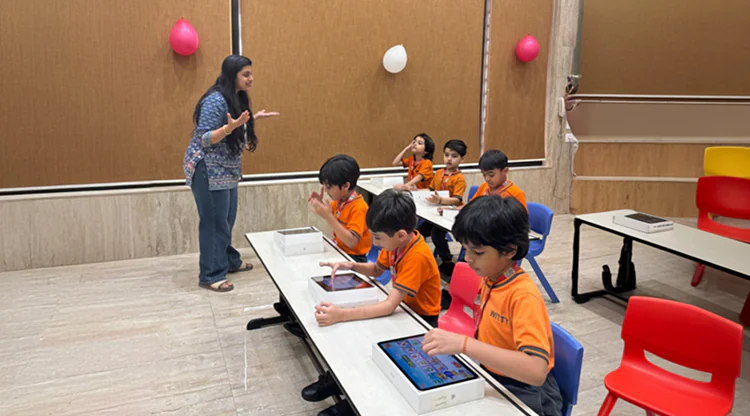
Digital literacy for elementary students begins with the basics: identifying trustworthy websites, understanding that not everything online is true, and learning to use search tools effectively. At this stage, it is about building good digital habits early.
At Witty Schools, we integrate age-appropriate digital learning into our curriculum from the primary years. Whether a child is attending our campus or exploring digital resources at home, the focus remains on purposeful, guided use of technology.
Schools like ours, including ICSE schools in Malad West, recognise that introducing structured digital learning in the early years lays the foundation for lifelong responsible tech use.
How Should Parents Support Digital Literacy at Home?
You do not need to be a tech expert to help your child become digitally literate. Here are some simple, effective steps:
- Browse together: Sit with your child when they go online. Ask questions like, “How do we know this is true?”
- Encourage creation over consumption: Have your child make a short video, a digital story, or a presentation. Creating builds skill.
- Talk about online safety: Make it a regular dinner-table topic, not a one-time lecture.
- Use school platforms actively: If your child’s school shares digital progress updates, engage with them regularly.
- Set clear boundaries: Balanced screen time with purposeful use teaches self-regulation alongside digital skills.
Which Schools Are Getting This Right?
Schools that weave digital literacy skills for students into their everyday learning, rather than treating it as a standalone subject, see the best outcomes. This includes integrating digital tools across subjects, training teachers in responsible technology use, and keeping parents in the loop.
At Witty Schools, we believe that digital literacy for elementary students is a shared responsibility. The best learning happens when schools and families work together. Parents near ICSE schools in Goregaon East and similar neighbourhoods in Mumbai can look for schools that clearly outline their digital literacy programmes during admissions.
Frequently Asked Questions (FAQs)
1. What is the right age to start teaching digital literacy to children?
Digital literacy can begin as early as age five or six, starting with guided browsing and identifying trustworthy content. By the time a child reaches Class 3 or 4, they should understand basic online safety and source evaluation.
2. How do I know if my child’s school is teaching digital literacy effectively?
Ask the school if digital literacy is embedded across subjects or taught only in computer class. A good programme includes online safety education, critical thinking with digital content, and project-based digital tasks.
3. What is one thing parents can do today to build digital literacy at home?
The simplest step is to browse together with your child at least once a week and practise questioning the sources you both come across. It naturally builds the habit of critical thinking.
Where Do We Go From Here?
The digital world is only going to grow larger and more complex. The children who thrive in it will not simply be those who use technology the most, but those who use it the most thoughtfully. That ability begins with the right foundation, built together by schools, parents, and communities.
At Witty Schools, we are committed to being that partner for every family. If you would like to learn more about our approach to digital learning, we warmly invite you to visit www.wittyschool.org or get in touch with us directly.