Skip to content

Key Takeaways
- Social and emotional skills for students are built years before formal academics begin, through play, routine and relationships.
- Preschool developmental milestones such as sharing, waiting turns and naming feelings predict later school readiness.
- Emotional development in preschool shapes how a child handles friendships, frustration and change for years to come.
- Simple, repeated social-emotional development activities at home and school build lasting confidence.
- A warm, consistent environment, at home and at school, gives social and emotional development in preschoolers the best possible start.
Picture a three-year-old who bursts into tears because a friend picked the red crayon first. That small moment is where real learning happens. Preschool covers far more than shapes and colours. It is where a child first learns to wait, to share, to lose a game without falling apart, and to say sorry and mean it. These early lessons quietly shape how a child handles school, friendships and setbacks for years to come. This guide looks at why social and emotional development in preschool deserves as much attention as ABCs and numbers, and how parents and schools can nurture it together.
What is Social and Emotional Development in Early Childhood?
Social and emotional development refers to a child’s growing ability to understand and manage feelings, build relationships, and behave appropriately for a situation. This happens gradually, through play, conversation, and everyday routines such as mealtimes and bedtime. A toddler who learns to calm down after a tantrum, or a four-year-old who learns to ask for a turn instead of grabbing a toy, is practising skills that form the foundation of emotional development in preschool. These skills rarely get marked on a report card, yet they influence how a child copes with nearly every experience that follows.
Why Social and Emotional Skills Matter in Preschool
Preschool is often a child’s first extended experience away from family, and it asks a lot of them socially. They must share attention with other children, follow group instructions, and manage feelings without a parent close by.
- They help children form friendships and resolve small conflicts on their own.
- They build the self-control needed to sit through a story or wait for a snack.
- They reduce anxiety around new situations and separation from parents.
- They lay the groundwork for later academic focus and classroom behaviour.
According to ASER 2024, pre-primary enrolment among three-year-olds in India rose from 68.1% in 2018 to 77.4% in 2024, meaning more Indian children than ever are entering group settings early, making social and emotional development in preschoolers more relevant to more families each year.
Preschool Social and Emotional Milestones at a Glance
| Age | Typical Social-Emotional Milestone |
| 3 years | Shares toys with support; seeks comfort from caregivers. |
| 4 years | Takes turns in games; names basic emotions. |
| 5 years | Resolves minor peer conflicts; shows early empathy. |
What Are the Key Components of Social and Emotional Development?
- Self-awareness: recognising and naming one’s own feelings, such as saying I am angry instead of hitting out.
- Self-regulation: managing big emotions and impulses, for instance pausing before reacting to disappointment.
- Social awareness: noticing how others feel and adjusting behaviour accordingly, such as softening tone around an upset friend.
- Relationship skills: cooperating, sharing and communicating clearly enough to play and work alongside peers.
- Responsible decision making: choosing kind, safe actions, even in small situations like deciding whether to include a lonely classmate.
- Resilience: bouncing back after a setback, such as trying again after a block tower falls.
Each of these areas grows through daily practice, and together they form a fuller picture of the preschool developmental milestones schools and parents look for.
Why Empathy Plays a Central Role in Early Childhood Development
Of all these components, empathy deserves particular attention, since it underpins almost every social interaction a child will have. A child who senses a friend is sad, and responds with a hug or a kind word, is drawing on a skill that supports teamwork, fairness and friendship for life. Empathy is rarely innate in its fully formed sense; it is modelled and practised, often through stories, pretend play and gentle guidance during conflicts. Preschools that build empathy through circle time and cooperative games give children a head start on kindness that carries into primary school and beyond.
How Social and Emotional Development Supports Academic Success
Academic and emotional readiness are far more connected than they appear on the surface.
- A child who can manage frustration is more likely to persist with a tricky puzzle.
- A child comfortable asking for help is quicker to close learning gaps.
- Classroom harmony, built on cooperation, means less disruption and more teaching time.
A Kerala based study using the DECA-P2 assessment found that 24.9% of preschool children showed behavioural concerns in the area of need category, a reminder that unaddressed emotional struggles can quietly affect learning. This is why social and emotional skills for students belong alongside literacy and numeracy on any preschool checklist.
Who Nurtures Social and Emotional Skills in Preschool? The Role of Teachers
Teachers observe children in situations parents rarely see, placing them in a unique position to guide emotional growth.
- They model calm responses during conflicts, showing disagreements can be resolved with words.
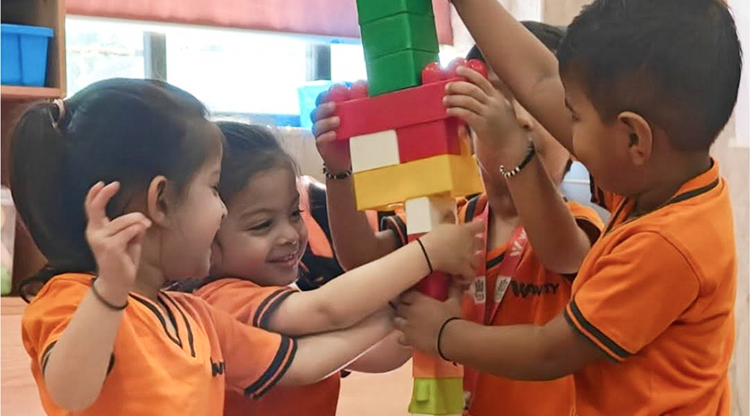
- They design group activities that require turn-taking, listening and cooperation.
- They notice early signs of anxiety or withdrawal and flag these to parents promptly.
- They create a predictable, safe classroom routine, which reduces emotional stress.
A skilled preschool teacher uses play purposefully to build confidence and connection, rather than simply supervising it.
How Parents Can Support Social and Emotional Development at Home
- Name feelings out loud, both your child’s and your own, so emotions feel familiar rather than frightening.
- Read stories where characters solve problems, then discuss what else the character could have done.
- Keep gentle, consistent routines for meals, sleep and screen time, since predictability lowers emotional strain.
- Praise effort and kindness specifically, rather than offering only general praise.
- Allow supervised playdates and sibling play, since practice with peers builds real social skill.
- Try simple social emotional development activities, such as feelings charades or a daily gratitude chat at dinner.
Why Witty Schools Is the Right Partner for Your Child’s Growth
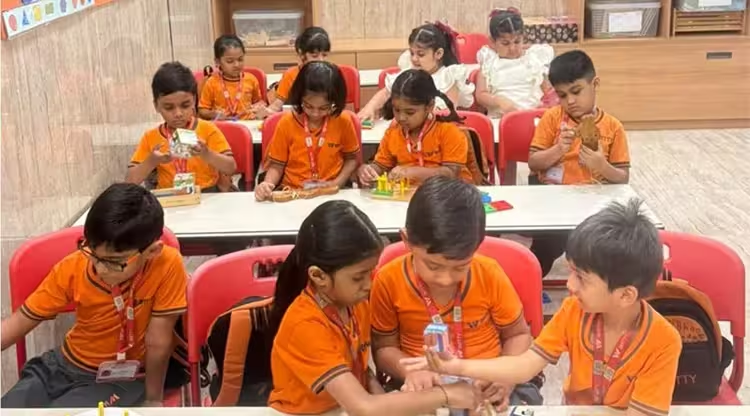
At Witty Schools, social and emotional growth is treated as seriously as academics. Our pre-primary programmes rest on small class sizes, trained educators and daily circle time that gives every child a chance to talk, listen and be heard. Structured play corners encourage cooperation over competition, and teachers are trained to notice a child’s emotional cues early, working closely with parents when needed. Whether you are exploring international schools in Mumbai, comparing Schools in Bhilwara, our campuses across Mumbai, Udaipur and Bhilwara share one goal: raising confident, emotionally secure children ready for what comes next.
What’s Next? Taking the First Step with Witty Schools
Social and emotional development in preschool is not a side note to early education, it is the foundation everything else is built on. A child who feels understood, capable and connected walks into primary school ready to learn, academically and emotionally.
If you are weighing your preschool options, ask about the curriculum, and also how emotional growth is nurtured daily. Book a campus visit with one of the best Preschool in Mumbai, and see this learning come to life.
Frequently Asked Questions
1. What age does social and emotional development begin in children?
It begins in infancy, through bonding with caregivers, and continues actively through the preschool years, when children start practising sharing, empathy and self-control in group settings.
2. How can I tell if my child is meeting preschool developmental milestones?
Look for growing independence, the ability to separate from you without prolonged distress, simple conflict resolution with peers, and the capacity to follow short group instructions.
3. What are some easy social emotional development activities I can try at home?
Feelings charades, turn-taking games, shared storytime with discussion, and a daily gratitude chat at dinner are all simple, low effort starting points.