Skip to content


Teaching isn’t just delivering content; it’s orchestrating attention, emotions, and momentum—whether you’re with curious preschoolers or quick-witted teens. That’s why classroom management sits at the core of great teaching: it’s the quiet system that keeps learning on track, behaviour predictable, and energy purposeful. When it’s done well, students feel safe to take risks, teachers have the bandwidth to teach, and the day ends with progress instead of fatigue.
At Witty International School, we view classroom management not as control but as connection. Clear routines, consistent expectations, and warm relationships turn “discipline” into a culture of respect—one where every learner feels seen, supported, and ready to participate. The ten strategies that follow translate that philosophy into everyday practice you can use tomorrow.
What is Classroom Management?
In simple words, classroom management refers to everything a teacher does to make learning organised and effective. It includes setting clear expectations, maintaining focus, and building a sense of community where every student feels included.
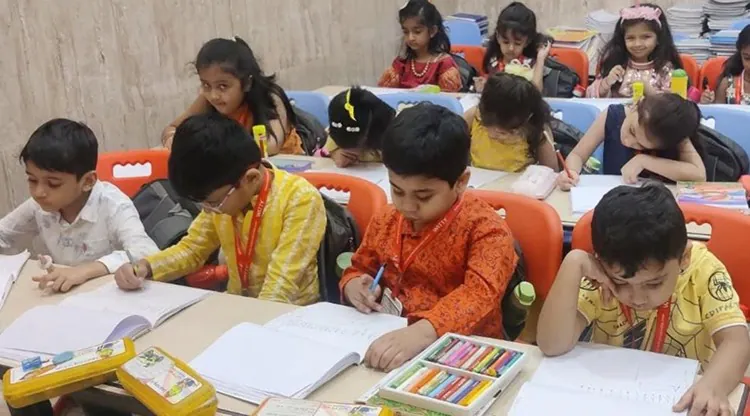
Imagine a classroom where students know what to do, transitions happen smoothly, and everyone participates with enthusiasm. That is the magic of good management at work.
The psychologist B.F. Skinner emphasised that human behaviour can be shaped through reinforcement. At Witty, teachers take this idea forward with positive intent. Instead of punishing mistakes, they celebrate effort, teamwork, and progress. Whether it is a smile, a word of encouragement, or a note of appreciation, teachers know that praise motivates better than correction.
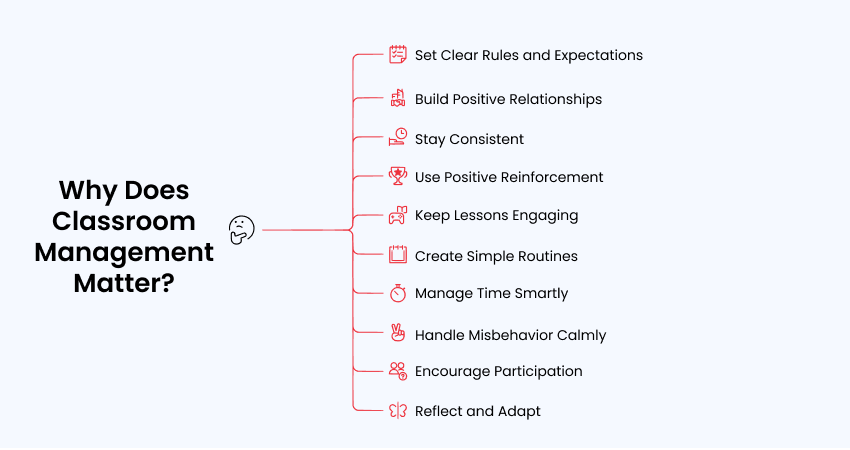
Why Does Classroom Management Matter?
Every teacher eventually comes to realise this truth: even the best lesson plan can fail in a noisy, unstructured classroom. The importance of classroom management lies in how it transforms learning from chaos into calm, from distraction into discovery.
When students understand boundaries, experience fairness, and feel respected, they naturally perform better. At Witty International School, teachers strive to create emotionally safe spaces where students are heard, understood, and valued.
Effective management is not about strictness; it is about shaping an environment where both teaching and learning can flourish.
Let us explore ten practical classroom management strategies and classroom management techniques that teachers at Witty International School use to build classrooms filled with curiosity, calm, and creativity.
1. Set Clear Rules and Expectations
Clarity is the foundation of structure. Children respond best when they know exactly what is expected of them.
One excellent approach is to involve students in creating the classroom rules. Instead of telling them “Don’t shout,” let them suggest “Use your inside voice.” This slight shift gives them a sense of ownership.
Teachers at Witty International School often say that when students help make the rules, they follow them with pride because they feel responsible for maintaining the order they helped create.
2. Build Positive Relationships
Students learn best when they feel respected and valued. A teacher who takes the time to get to know their students, what they enjoy, and what they struggle with creates a foundation of trust.
A simple greeting at the door, remembering birthdays, or acknowledging a student’s effort can make a big difference.
At Witty International School, teachers follow the golden rule of connection before correction. When students feel seen, they naturally behave better and engage more deeply in the learning process.
3. Stay Consistent
Consistency builds trust. When rules apply fairly every day, students know what to expect, and the classroom feels like a safe space.
Imagine saying, “No phones during lessons,” one day but ignoring it the next. Students will quickly sense inconsistency and lose respect for the rule.
Teachers at Witty believe that predictability fosters discipline and helps students take responsibility for their actions.
4. Use Positive Reinforcement
Positive reinforcement is one of the most effective classroom management techniques. Instead of focusing on mistakes, highlight good behaviour.
A quick “I love how you waited patiently” or “That was a thoughtful answer” reinforces the correct behaviour instantly.
Teachers often use reward systems, such as sticker charts or appreciation circles, to maintain high motivation. The result? A classroom that feels happy, confident, and productive.
5. Keep Lessons Engaging
Students lose focus when lessons feel repetitive. Keeping learning interactive is one of the most practical classroom management strategies.
Use storytelling, games, role-playing, or group projects to bring topics to life.
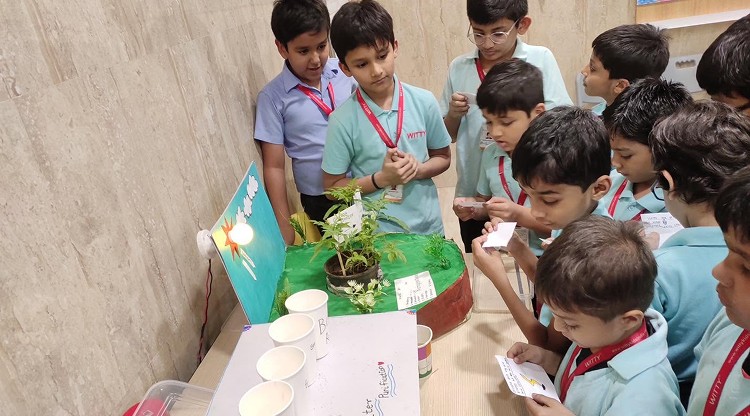
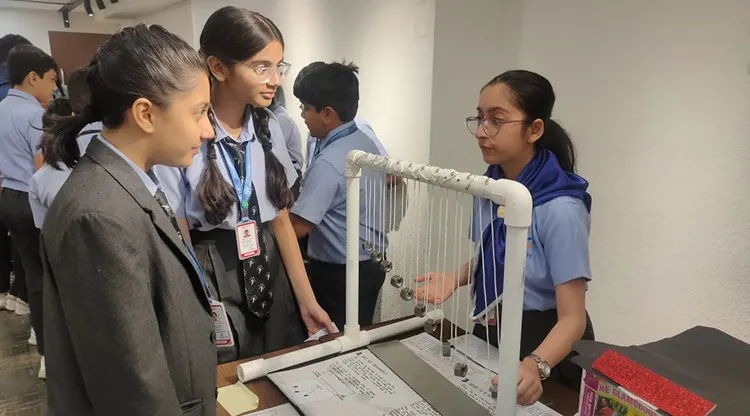
At Witty International School, classrooms are filled with creative activities that make learning a joy. Whether it’s a science experiment, a quiz, or a debate, the goal is always to spark students’ curiosity.
If you are looking for good international schools in Mumbai, you will notice that Witty’s approach to engagement goes beyond textbooks; it sparks a lifelong learning experience.
6. Create Simple Routines
Routines make classrooms feel secure and organised. When students know the daily flow, from attendance to transitions, they feel calm and confident.
A predictable pattern for mornings, lessons, and dismissals can make the day run more smoothly. Routines reduce confusion and save valuable teaching time.
Witty teachers carefully design routines that strike a balance between structure and flexibility, ensuring every student feels at ease.
7. Manage Time Smartly
A successful classroom values every minute. Start and end lessons on time, break tasks into smaller goals, and include short brain breaks to recharge.
At Witty, teachers use energisers between subjects, like stretching or a quick mindfulness exercise, to keep focus sharp without tiring students.
This structured yet flexible time management ensures that learning continues effortlessly throughout the day.
8. Handle Misbehavior Calmly
When misbehaviour happens, and it always does, staying calm is key. Emotional reactions can escalate situations, while calm responses restore order.
Instead of scolding publicly, address the issue privately and explain why the behaviour was not acceptable. Ask reflective questions, such as, “What can we do differently next time?”
This approach fosters accountability and empathy, enabling students to understand the impact of their actions and decisions.
At Witty International School, teachers view every challenge as a learning opportunity rather than a setback.
If you are exploring top schools in Bhilwara, Witty stands out for its nurturing approach to discipline that teaches responsibility with respect.
9. Encourage Participation
Learning is most effective when students are actively involved. Encourage them to share opinions, ask questions, and lead small activities.
This idea aligns with Lev Vygotsky’s Social Development Theory, which emphasises that children learn best through social interaction and collaboration.
At Witty International School, classrooms are buzzing with group projects, peer discussions, and creative presentations that make students confident communicators.
Parents seeking admission for kindergarten can expect their child to grow in an environment that values both voice and individuality.
10. Reflect and Adapt
Every classroom is unique. What works with one group may not work with another. Reflecting helps teachers identify what to keep, what to modify, and what to change completely.
Witty educators regularly collaborate, sharing their classroom experiences and learning from one another. This reflective culture ensures that teaching methods evolve in response to the students’ needs.
For families exploring top schools in Udaipur, Rajasthan, this spirit of growth and reflection defines Witty’s approach to education.

The Witty Way of Classroom Management
At Witty International School, classroom management is seen as a partnership between teachers and students. It is about empathy, creativity, and consistency coming together to build classrooms filled with warmth and learning.
From kindergarten to higher grades, Witty teachers combine discipline with understanding, ensuring that every child feels supported and encouraged. The school environment fosters curiosity, kindness, and confidence, values that benefit students well beyond the classroom.
Witty’s philosophy blends classic psychological insights with modern teaching approaches, ensuring that every student not only learns but enjoys the process.
Effective classroom management is not something that happens instantly. It grows every day through patience, practice, and reflection.
At Witty International School, teachers teach with heart. A classroom here is more than a space for academics; it is a place for laughter, imagination, and exploration.
Effective management does not silence students; it empowers them to speak, share, and grow.
In the end, that is what excellent teaching looks like: a classroom where students learn joyfully and teachers teach with ease, balance, and purpose.