Skip to content

How Do Preschool Activities Improve Social Skills and Confidence in Young Students
Key Takeaways
- Preschool is the primary stage where children learn essential life skills like sharing, empathy, and conflict resolution.
- Structured activities for preschoolers help reduce classroom conflicts by 20% and foster teamwork.
- Play-based learning is scientifically proven to build stronger interpersonal skills in young learners.
- Parents can easily replicate these preschool learning activities at home to reinforce confidence.
Why Should Parents Care About Preschool Social Activities?
A child’s confidence doesn’t simply appear overnight. It grows in the small moments of a preschool day. When a three-year-old successfully asks a friend for a crayon or waits for their turn on the swing, they are building the foundation of their self-esteem.
The Indian government’s 2024-25 UDISE+ report found that 80% of children entering Class 1 nationwide had some form of preschool experience. This data proves how widely parents and educators recognise early learning as a stepping stone for school readiness. This is why selecting a strong programme among pre-schools in Mumbai is a decision that impacts far more than a child’s ABCs.
Quick Answer: What You Need to Know
Preschool activities enhance social skills by teaching children to share, exhibit empathy, engage in turn-taking, express emotions, and work together through play-based learning. |
What Are the Core Social Skills Developed Through Play?
Before we dive into the “how”, let’s look at the “what”. Preschool educators focus on specific competencies that turn a shy toddler into a confident communicator.
Core Social Skill | Why It Matters for Preschoolers |
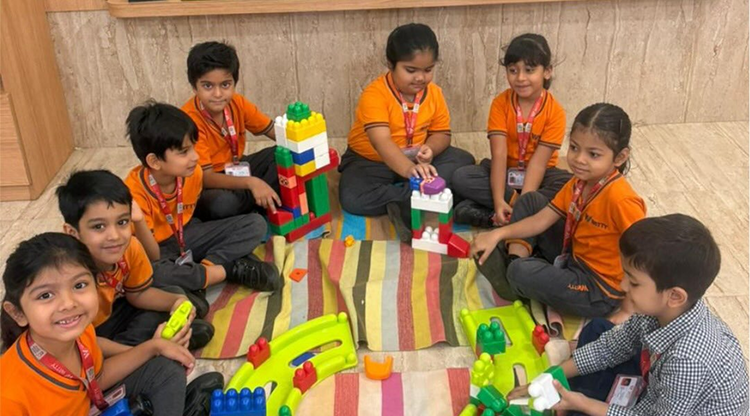
Cooperation | Learning to work with others to achieve a common goal, such as building a block tower together. |
Emotional Recognition | Identifying feelings like happiness or sadness in themselves and others is the root of empathy. |
Conflict Resolution | Using words to solve disputes instead of crying or grabbing is a key indicator of maturity. |
Active Listening | Paying attention to teachers and peers, which is essential for following instructions and making friends. |
How to Build Social Skills: Practical Activities for Preschoolers
You don’t need a classroom to teach these skills. Daily activities work wonders. Here are some evidence-based methods to integrate educational activities for preschoolers into your child’s routine.
The Role Play Scenario (The “Doctor” Visit)
Children learn to navigate the world by pretending. Set up a small shop or a doctor’s clinic at home. When a child plays the “doctor” and you play the “patient”, they practice empathy. They learn to listen to a problem (you have a tummy ache) and offer a solution. This is a classic social skills activity for preschoolers’ routines because it forces them to see the world from another perspective.
Emotion Charades
Write down basic emotions (happy, sad, scared, angry) on slips of paper. Ask your child to act them out without words. This builds emotional vocabulary. A child who can say, “I feel frustrated” instead of having a meltdown is a child who will thrive in any social setting.
The Cooperative Mural
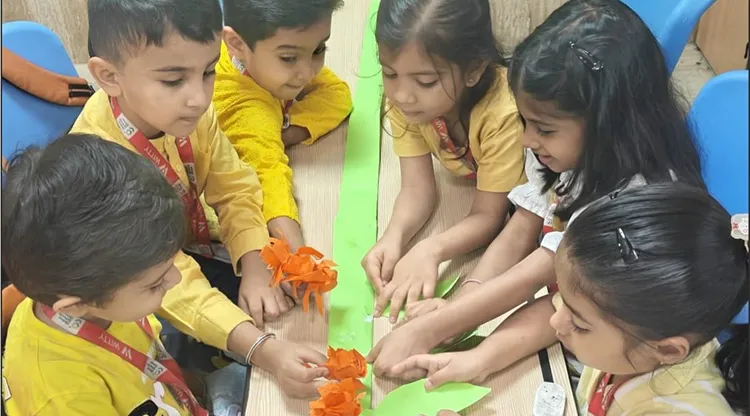
Give two children one piece of paper and one crayon. They must work together to draw a single picture. This forces negotiation and turn-taking. It addresses sharing in a very real, hands-on way.
Storytelling with Puppets
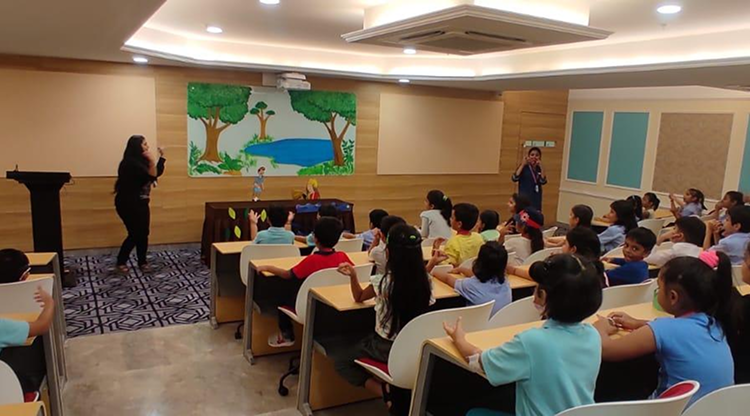
Use hand puppets to act out a common problem, such as taking a toy. Ask the children watching to tell the puppets what to do. This provides a safe distance to practice problem-solving. A study highlighted that group play and sharing reduce conflicts by 20% and foster teamwork in 80% of preschoolers.
Where Do These Social Emotional Activities Happen?
While home practice is excellent, the structured environment of a school provides the repetition and peer interaction required for mastery. When looking for good schools in Borivali, you want a place where social-emotional learning is woven into every single day.
At Witty Schools, our preschool programme is built around a philosophy that a child’s first school experience should feel like a warm, extended family. Here is what makes us a trusted choice for parents across Mumbai:
- Low teacher-student ratio: Our preschool classrooms maintain a 1:10 teacher-to-student ratio, ensuring every child receives personal attention, prompt support, and a strong sense of being seen and valued.
- Play-based curriculum: We follow a structured yet flexible curriculum that blends phonics, numeracy, life skills, and social-emotional learning through guided play. Children learn by doing, not just by listening.
- Safe and nurturing campus: Our Borivali campus features CCTV monitoring, child-proofed interiors, sanitised learning spaces, and trained support staff at every entry and exit point.
- Transparent parent communication: We keep families in the loop through regular parent-teacher interactions, weekly updates, and a dedicated communication app so you always know what your child is learning and how they are growing.
- Purposeful learning corners: Classrooms are designed with dedicated zones including a quiet reading nook, a pretend play area, and a block zone. Each space invites children to interact, negotiate, and share naturally.
- Structured daily routines: Every morning begins with circle time, where children greet each other by name, share a thought, and set the tone for a cooperative day. Teachers then guide social-emotional activities like group puzzles, emotion-sorting games, and singing rounds that build patience, turn-taking, and vocal confidence.
Explore our curriculum page to learn more, or fill out our parent enquiry form to schedule a campus visit.
Frequently Asked Questions
My child is very shy. Will preschool activities overwhelm them?
Not at all. Quality preschools use a gradual release model. The teacher starts by modelling the activity, then offers support, and finally allows the child to participate when they feel safe. Structured play provides a predictable script for shy children, which actually reduces their anxiety.
How do I know if a preschool is actually teaching social skills?
Look for evidence of conflict resolution in action. Ask the teacher, “If two children fight over a toy, what is your process?” A good school will describe how they help children name emotions (“I see you are angry”) rather than just punishing the behaviour.
Can I do these activities if I only have one child?
Absolutely. You become the peer. Play board games that require turn-taking. Role-play different characters. Cook together, which requires following the steps and waiting for the timer. These one-on-one interactions build the same neural pathways for self-regulation.
What activities help preschoolers develop confidence?
Activities that give children small, achievable wins are the most effective confidence builders. Storytelling with puppets, simple cooking tasks, show-and-tell sessions, and role-play scenarios all allow children to take initiative, make decisions, and feel proud of their contribution. Consistent praise for effort rather than outcome also reinforces a growth mindset from an early age.
How does preschool improve communication skills?
Preschool creates dozens of natural communication opportunities every day. Morning circle time encourages children to speak in front of a group. Group activities require them to ask for what they need, negotiate, and listen actively. Teachers model language patterns like “I feel…” and “Can I have a turn?” so children gradually internalise how to express themselves clearly and respectfully.
What should parents look for in a preschool in Borivali?
Parents in Borivali should prioritise schools that offer a low teacher-student ratio, a play-based curriculum with structured social-emotional learning, visible safety measures on campus, and clear communication channels with families. It is also worth visiting the school in person to observe how teachers interact with children and whether the classroom environment feels welcoming and stimulating. Witty Schools’ Borivali campus is open for guided tours. You can apply for admissions here.

Disha Shah
(Designation)
Bio:
Disha Shah is a passionate and dedicated education professional with over 12 years of experience at Witty. Known for her strong work ethic, commitment, and dynamic approach to education, she has consistently contributed to creating enriching learning environments for students. Deeply invested in holistic child development, Disha believes in nurturing not only academic excellence but also the social, emotional, and creative growth of every learner. Her dedication to innovative teaching practices and meaningful educational experiences continues to inspire students, educators, and the wider school community.
Teacher Student Ratio
– PG and Nur – 1:12
– Jr.KG and Sr.KG – 1:15
Curriculum Approach
– A 360-degree kindergarten curriculum that nurtures a child’s intellectual, emotional, social, physical, and creative development through joyful, experiential learning. It helps children grow into confident learners, compassionate individuals, and responsible citizens with strong values, life skills, and respect for others.
Safety
– At Witty, safety is our top priority. With a dedicated safety team, CCTV surveillance across the campus and school buses, well-trained and verified staff, supervised activities, hygiene practices, and emergency preparedness measures, we ensure a secure, caring, and child-friendly environment where every child feels safe, confident, and happy to learn and grow.
Campus facilities
– At Witty, our thoughtfully designed campus facilities create a joyful and enriching learning environment for young learners. The campus includes a toddler pool, outdoor garden, library, iPad lab, Montessori lab, art room, Music & Movement Studio, and a spacious auditorium — encouraging creativity, exploration, confidence, and holistic development in every child.
Daily Routine
– Our Daily Routine is thoughtfully designed with a balance of Scholastic and Co-Scholastic learning experiences to ensure the 360-degree development of every child. The schedule includes literacy, numeracy, thinking skills, world around me, meditation, creative activities, music & movement, manipulative play, and activity-based learning — helping children grow academically, socially, emotionally, physically, and creatively in a joyful environment.