Skip to content

Imagine a classroom where children sit calmly, listen attentively, and respond thoughtfully, not because they are forced to, but because they feel present and engaged. That’s the power of mindfulness in education. From reducing stress to improving focus, teaching students mindfulness can transform both their learning experience and their overall well-being.
Whether you are a parent exploring admission for kindergarten, a teacher designing a curriculum, or a school administrator aiming to improve student outcomes, understanding mindfulness and its role in education is crucial.
What Is Mindfulness?
First things first: what is mindfulness? Simply put, mindfulness is the practice of paying full attention to the present moment, noticing thoughts, emotions, and sensations without judgement.
For children, this might mean noticing the feeling of their feet on the ground, listening carefully during storytime, or being aware of how their body feels after running or jumping.
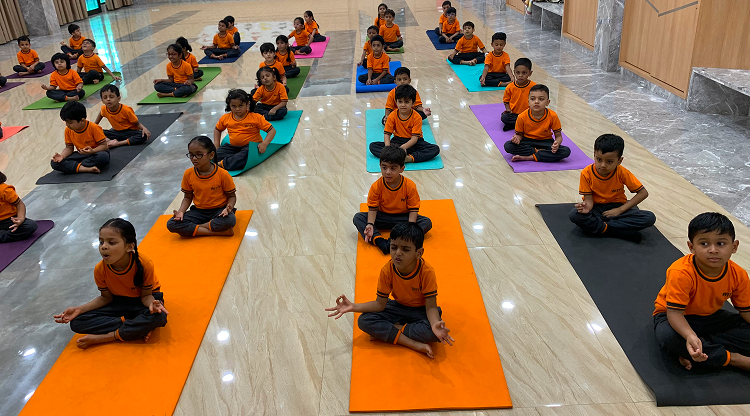
In schools, what is mindfulness in education often involves structured exercises like breathing activities, guided meditations, or reflection circles, all designed to help students focus, manage emotions, and be aware of themselves and their surroundings.
The Importance of Being Mindful for Students
You might wonder: why is the importance of being mindful especially relevant in classrooms today? Modern students face more distractions, stress, and performance pressure than ever before. Introducing mindfulness can help in several key ways:
-
Reduces Anxiety and Stress
Children and teens practising mindfulness experience lower stress levels and fewer anxiety symptoms. Simple breathing exercises or short meditation sessions can help students calm their minds before exams, presentations, or even daily classroom challenges.
-
Enhances Focus and Attention
Mindfulness trains students to notice when their thoughts drift and gently bring their focus back. This skill improves concentration, which is particularly valuable in learning-intensive environments.
-
Improves Emotional Regulation
Students learn to recognise emotions without reacting impulsively. This helps manage frustration, resolve conflicts, and maintain positive relationships with peers and teachers.
-
Boosts Academic Performance
Educational psychology suggests that mindfulness supports working memory, executive function, and problem-solving skills, all of which contribute to better academic performance over time.
Benefits of Mindfulness in Schools
In addition to individual benefits, incorporating mindfulness into school culture brings broader advantages:
- Stronger Social Skills: Practising awareness and empathy in mindfulness exercises helps students collaborate and communicate more effectively.
- Increased Resilience: Students develop coping strategies to manage setbacks and challenges.
- Positive Classroom Environment: Calm, mindful students create a quieter, more focused classroom, which benefits teachers and peers alike.
- Reduced Behavioural Problems: Awareness and self-regulation reduce impulsive actions and conflicts.
These outcomes highlight why mindfulness in schools is gaining attention worldwide, whether in a pre-kindergarten classroom or middle school.
How to Improve Mindfulness in Students?
If you’re wondering how to improve mindfulness among students, here are practical strategies:
1. Short Daily Practices
Even 3–5 minutes of guided breathing, mindful listening, or simple yoga exercises can make a significant difference over time.
2. Mindful Movement and Play
Encourage children to notice how their body feels while moving. Activities like balancing on one foot, slow walking, or stretching can integrate mindfulness into natural routines.
3. Reflective Journals
Older students can keep journals to record their thoughts, feelings, and observations. This develops self-awareness and emotional intelligence.
4. Incorporate Mindfulness Across Subjects
Mindfulness isn’t only for meditation sessions. You can integrate it into reading, art, and science by encouraging students to fully observe, question, and reflect on what they are learning.
5. Parent and Teacher Involvement
Mindfulness works best when it’s reinforced at home and school. Parents and teachers can model mindful behaviour by staying present during conversations and encouraging reflection.
Mindfulness and Early Education
Even at the preschool level, teaching what mindfulness in education is can have profound effects. For young children, mindfulness helps in:
- Developing attention span
- Managing separation anxiety
- Recognising and naming emotions
- Encouraging curiosity and observation
Parents exploring admission for kindergarten often look for schools that include mindfulness programmes, because early practice sets children up for emotional balance and learning readiness.
Indian Research Supporting Mindfulness in Education
- Recent studies conducted in India have provided compelling evidence of the positive impact of mindfulness practices on students’ cognitive abilities, emotional well-being, and academic performance.
- A study by Priya Desai from Banaras Hindu University, published in the American Journal of Psychology, assessed the effects of mindfulness meditation on cognitive performance in college students. The research found that engaging in mindfulness meditation led to improvements in attention, memory, and executive functioning, along with reduced levels of stress and anxiety. These findings suggest that incorporating mindfulness meditation into daily routines could enhance cognitive functioning and promote overall well-being among college students. AJPO Journals
- Another study published in Frontiers in Education explored the role of mindfulness in early STEM academic achievement among Indian university students. The research highlighted that mindfulness, along with empathy, values, and personality traits, serves as a psychosocial correlate of academic success in STEM fields. This underscores the importance of integrating mindfulness into educational practices to support academic excellence. Frontiers
- Additionally, a study published in Frontiers in Public Health examined the impact of mindfulness-based interventions in natural settings on the well-being of school students in India. The results indicated that mindfulness-based interventions, when executed in natural settings, enhance student well-being, gratitude, resilience, awareness, and positive emotions, while decreasing perceived stress and negative emotions. Frontiers
These studies collectively emphasise the significant role of mindfulness in enhancing students’ cognitive abilities, emotional resilience, and academic performance, advocating for its integration into educational curricula across India.
Choosing Schools That Support Mindfulness
If you’re a parent, one of the most important steps is choosing a school that prioritises mindfulness along with academics. Look for:
- Programs that integrate mindfulness into daily routines
- Trained teachers who guide children in awareness exercises
- Safe and nurturing environments that promote calm and focus
In India, there are many options for parents: good schools in Mumbai focus on experiential learning and holistic development, often incorporating mindfulness practices.
Tips for Parents to Encourage Mindfulness at Home
Even without a formal school programme, parents can cultivate mindfulness at home:
- Mindful Breathing: Practise slow, deep breaths with your child.
- Sensory Observation: Encourage children to notice sounds, sights, textures, and smells around them.
- Gratitude Practices: Share daily moments of gratitude to build awareness and positivity.
- Model Mindfulness: Children learn by observing. Staying calm, listening actively, and pausing before reacting sets a powerful example.
- Screen-Free Reflection: Encourage a few minutes of quiet, screen-free time each day.


The Bigger Picture: Lifelong Benefits
The benefits of mindfulness extend beyond academics. Mindful students are:
- More resilient to stress and change
- Better at managing emotions and relationships
- Confident and curious learners
- Able to focus and retain knowledge effectively
By cultivating mindfulness early, children are better prepared for the challenges of school and life, growing into adults who can navigate uncertainty, make thoughtful decisions, and maintain emotional well-being. For parents in Rajasthan, the top schools in Udaipur, Rajasthan, offer programmes that balance academics, creativity, and social-emotional learning.
Mindfulness is more than a buzzword; it is a powerful tool to enhance students’ well-being and academic performance. By teaching what mindfulness is, emphasising the importance of being mindful, and exploring how to improve mindfulness, schools and parents can create environments where children thrive emotionally, socially, and academically.