Skip to content

Key Takeaways
- Kindergarten builds early literacy, numeracy, and problem-solving skills through play, not drills.
- Social and emotional growth, sharing, patience, and confidence matter just as much as academics at this stage.
- NEP 2020 and the ₹900 crore Khelo India allocation (Union Budget 2024-25) reflect India’s growing focus on physical activity from kindergarten onwards.
- A strong kindergarten foundation makes the transition into primary school noticeably smoother.
- Choosing the right kindergarten means looking closely at classroom balance, class size, and emotional support, not just rankings.
Introduction to Kindergarten Education
At Witty School, we have spent years watching little kids walk into our premises all scared and shy and leave as confident individuals with a curiosity and positive attitude towards learning. The transformation isn’t an accident but a result of proper kindergarten education that provides the first step for everything that follows academically, socially and emotionally. It is the stage where learning becomes interesting and fun through interactive activities that shape a child’s personality and genuinely begin to bloom.
Importance of Kindergarten for Child Development
We often have parents telling us that kindergarten is a waiting room before “real school” begins. On the contrary, we at Witty School believe that kindergarten is where learning quietly starts, often without the child knowing it.
- It develops literacy, math, and logical thinking through play.
- It stimulates curiosity by teaching children how to enquire instead of just memorising.
- It gives children the chance to get used to planning and schedules.
- It promotes the objectives of early childhood education, such as confidence, independence, and the expression of feelings.
Cognitive and Academic Skill Development
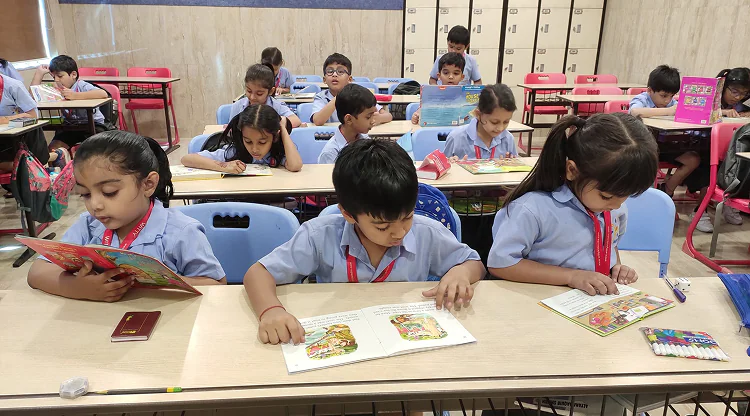
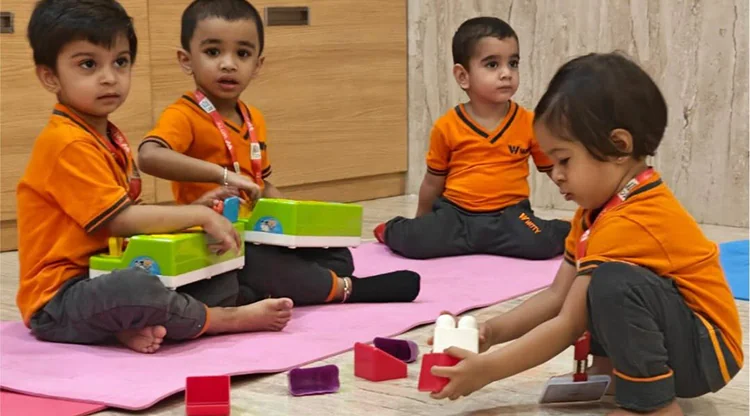
We design our classrooms to make learning feel like discovery, not drills.
| Skill Area | How It’s Built | Everyday Example |
| Literacy | Storytelling, rhymes, vocabulary building | Circle-time story sessions |
| Numeracy | Pattern recognition, counting games | Number and shape activities |
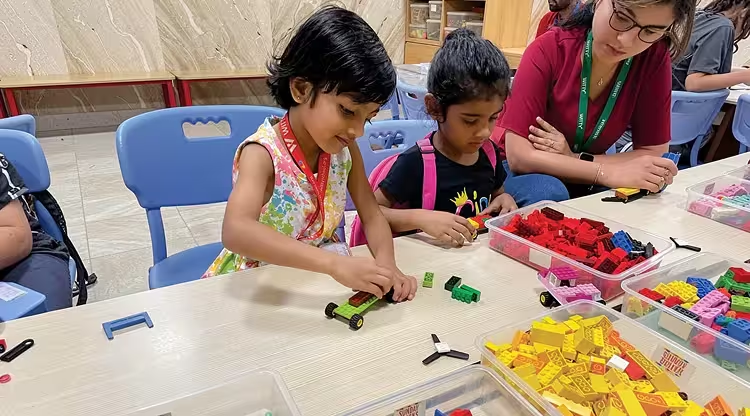
| Problem-Solving | Guided and open-ended play | Building blocks, puzzles |
| Attention & Memory | Repeated routines and structure | Daily classroom rituals |
This is one of the clearest benefits of kindergarten: children build genuine academic readiness without ever feeling like they’re “studying”.
Social, Emotional, and Communication Skills
Most of the important lessons at this age have nothing to do with complicated numbers and words. What truly helps is:
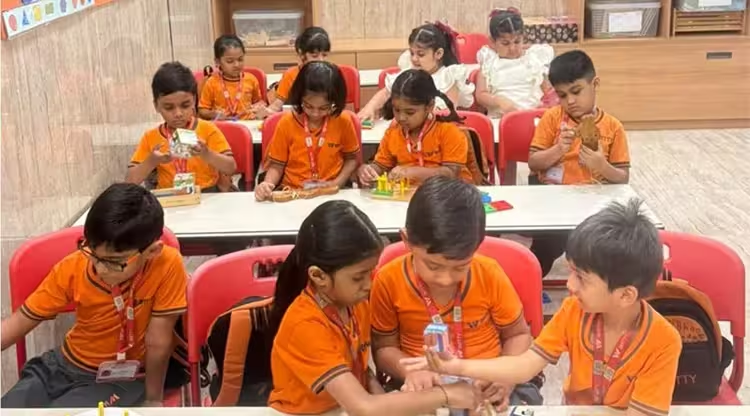
- Working together helps us to be more patient, share, and work together, thanks to gentle experiments.
- Daily routines play an important role in helping children with their emotions and teaching them how to deal with different feelings.
- Two educational activities that poetry theatre offers are show-and-tell and circle time. Both will help children learn to speak in public gradually.
Over time, children learn to understand and express their emotions thanks to communication with peers.
Physical Development and Learning Through Play
Learning does not have to be perceived as the time spent not using one’s mind at this stage; in fact, most forms of movement at this age serve as forms of learning themselves.
- Physical exercise in the open helps improve such essential capabilities as coordination, balance, and gross motor skills.
- Art and creativity improve fine motor skills through everyday creative projects.
- The National Education Policy (NEP) 2020, approved by the Government of India, includes the concept of physical activity as a vital part of the overall development of a child and urges preschool children to play games and engage in various sports.
- In addition to that, the Union Budget 2024-2025 has allocated ₹900 crore for the Khelo India project, which shows the government’s increasing concern about physical activity from early childhood.
At Witty, the focus is on play, sports, and movement at all levels of kindergarten, as opposed to making these activities secondary in importance.
Preparing Children for Primary School
The perception of kindergarten as a stepping stone rather than an endpoint is one that we share.
- Children start getting used to classroom procedures and norms.
- Foundation skills in early reading and maths start paving the way to Grade 1 learning.
- Following instructions and cooperating with classmates become second nature.
The confidence gained in the early years of education makes all the difference in the transition from preschool to “real school”.
The Role of Parents in Choosing the Right Kindergarten Programme
It can seem quite challenging to select a school for kindergarten, and hence, we suggest parents conduct a thorough search.
- Take a tour of the classroom where you can observe how the teachers interact with kids.
- Enquire about the degree to which structured education is combined with free play.
- Consider the class sizes and the level of personal attention received by kids.
- Learn about the ways in which the school promotes emotional well-being in addition to academic success.
Parents are the first teachers of their children, and the right kindergarten simply builds on that foundation, rather than replacing it.
Conclusion
Kindergarten plays a much bigger role than just issuing the first report card to children. It lays a solid foundation of confidence and curiosity, along with important habits for a child. At Witty School, we developed the kindergarten programme on the same principles of combining fun and organisation and compassion because we believe that the early years are important. We would be happy to have you visit our kindergarten if you are interested in finding out more about our philosophy.
FAQs
What is the right age to start kindergarten?
Typically, it is between 3 and 5 years, but a child’s preparedness plays an important role.
How is kindergarten different from primary school?
Unlike primary school, kindergarten is based on game- and play-oriented activities to have the best experience of getting to know something new.
Why is play so important in kindergarten education?
Play gives children the ability to do many activities at the same time.
How can parents support learning at home alongside kindergarten?
Reading together, talking to them, and giving them a chance to play freely is very important.
What should parents look for when choosing a kindergarten?
A good kindergarten must have its own uniqueness in teaching techniques and modern methods of kids’ education.