Skip to content

Introduction to Cambridge Primary Curriculum
The choice of the curriculum to study in the early school years determines the nature of the child’s thinking and learning. Cambridge Primary Curriculum is among the best-known academic frameworks that promote a comprehensive approach to education, combining high academic standards with the development of skills from the first years of learning. The following glossary aims to provide an easy-to-understand explanation of the main concepts related to the curriculum, helpful for parents in understanding what their children study.
What Is the Cambridge Primary Curriculum?
The Cambridge Primary curriculum is an international education framework developed by Cambridge International Education for learners typically aged 5 to 11. It provides clear learning objectives across different subjects while allowing schools to adapt their teaching to local contexts and students’ needs. It can also support progression to Cambridge Lower Secondary and later Cambridge pathways.
Primary Curriculum Overview
- A standardised academic framework with some flexibility in its implementation worldwide.
- Clear learning goals for every level covered by the curriculum.
- A strong emphasis on developing English, Mathematics, and Science competencies.
- International comparisons of students’ achievements and performance.
- A balance between high academic expectations and a holistic approach to education.
What Subjects Does Cambridge Primary Cover?
The Cambridge Primary framework covers all the basic subjects, providing a well-rounded education to students.
| Subject area | What it can develop |
| English | Reading, writing, speaking and listening |
| Mathematics | Numeracy, reasoning and problem-solving |
| Science | Scientific enquiry, observation and understanding |
| Global Perspectives | Research, analysis, collaboration and global awareness |
| Computing | Computational thinking and programming skills |
| Digital Literacy | Safe, responsible and effective use of technology |
Cambridge Primary offers a broad range of subjects, but the subjects available to students depend on the individual school. Schools may also provide Art, Music, Physical Education and other locally designed programmes.
What Is the Approach to Learning and Teaching?
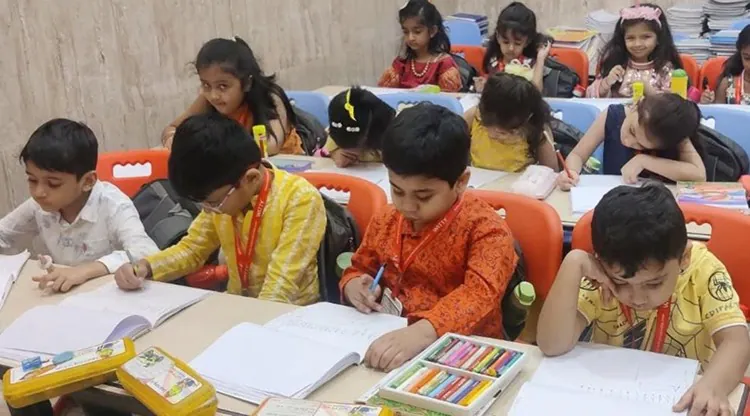
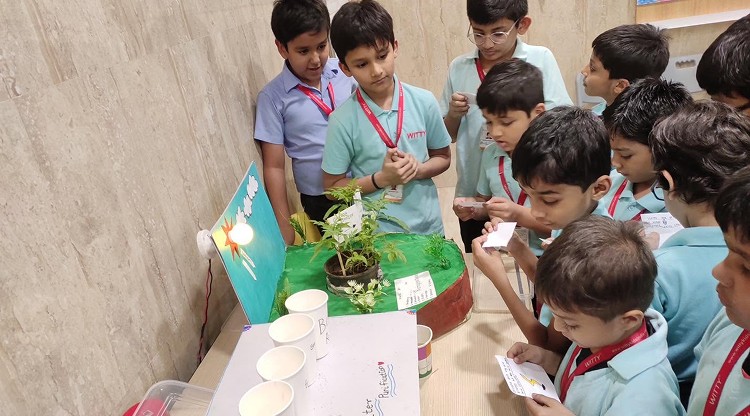
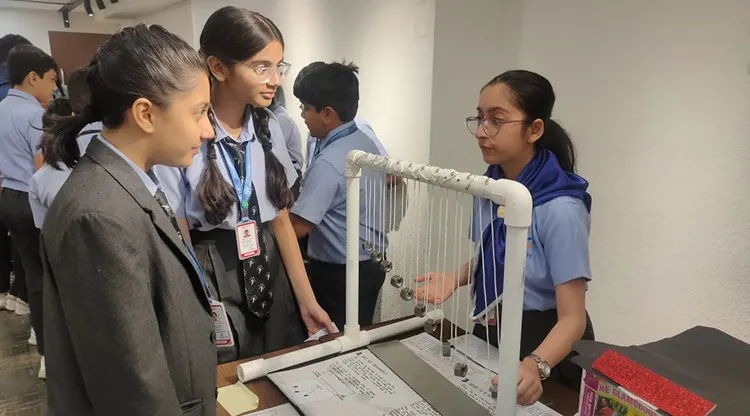
Cambridge education focuses on developing critical thinking and problem-solving abilities in students. The teachers use the inquiry-based approach to engage children in their learning process, exploring the subjects in detail. The lessons may include collaborative and communicative activities, helping students master the material rather than learning it by heart. Such an approach to learning enables the learners to develop a comprehensive understanding of the subjects they study.
What Are the Key Skills Developed Through the Curriculum?
The Cambridge curriculum encourages students to become lifelong learners, providing them with the necessary tools for further education.
- Learners develop critical thinking and problem-solving abilities and become better at verbal and written communication.
- They master the skills of independent research and investigation, which enables them to be inquisitive and achieve their goals.
- The acquired academic competencies contribute to their progress beyond each subject, being a solid foundation for further improvement.
Benefits of Cambridge Primary for Students
- Global relevance: An international recognition and appreciation of the academic framework.
- Strong foundation: Excellent preparation for the Cambridge Lower Secondary, which follows the primary stage.
- Balanced development: Development of learners’ critical thinking, academic, communicative, and creative skills in a balanced way.
- Flexibility: A wide range of flexible approaches to teaching, contributing to a better understanding of the subjects.
The benefits of this programme are found most in its balanced and holistic approach to learning, which distinguishes it from other frameworks. The students who enrol in Cambridge primary schools are encouraged to achieve the highest academic results and develop a variety of skills helpful for their future education.
What Assessments Do Primary Students Take?
Cambridge Primary offers schools several optional ways to assess learning. Teachers may use classroom activities and Cambridge Primary Progression Tests to monitor development during the programme. Schools may also choose Cambridge Primary Checkpoint assessments near the end of the primary stage in selected subjects. The assessment approach used, including the frequency of tests, depends on the school.
What Are the Roles of Teachers and Parents?
Teachers and parents have a shared responsibility for the child’s education in the Cambridge Primary Programme. The former take care of the students’ learning by providing the required instructions, including the use of inquiry-based approaches to engage them.
The teachers also follow the standards of the curriculum, delivering the knowledge in accordance with the established principles. The parents support their kids by reading to them and discussing the subjects covered in class. In this way, they supplement the students’ learning with their contributions and become a part of their educational process.
How Cambridge Primary Prepares Students for Future Education
By developing the necessary skills and competencies, the Cambridge Primary programme prepares the students for further stages of their education. The framework lays a solid foundation in all academic subjects; moreover, it focuses on the development of critical thinking, contributing to learners’ progress as independent thinkers.
Cambridge Primary can support progression to Cambridge Lower Secondary and, where offered, later pathways such as Cambridge IGCSE and Cambridge International AS & A Level. Its emphasis on subject knowledge, enquiry and independent thinking helps learners prepare for increasingly advanced school-level study.
Conclusion
Cambridge Primary combines subject knowledge with opportunities to develop reasoning, communication, enquiry and independent learning skills. Its flexible structure allows schools to create learning experiences that respond to their students and local context while working towards internationally defined objectives.
Witty International School, Malad, offers a Cambridge pathway designed to support students’ academic and personal development. Parents considering the programme should review the subjects, assessment approach and progression pathway available at the campus to determine whether it suits their child’s learning needs. Learn more about the Cambridge curriculum at Witty International School, Malad.