Skip to content

If you live with a young child, movement already shapes your day. Running through corridors. Jumping off sofas. Climbing onto chairs. You may find yourself reminding your child to be careful more often than you would like.
What often appears as restlessness is learning in action.
In the early years, children understand the world through their bodies. Movement helps them build confidence, manage emotions, and feel secure in unfamiliar situations. When parents recognise this, everyday play becomes calmer and more purposeful.
This guide has been created to support you during these early years. It does not aim to accelerate development or compare children. Instead, it helps you recognise healthy movement, understand what is normal, and use simple activities to support long-term growth.
How Does Movement Support Learning and Behaviour?
Parents often ask what motor skills children should have when they begin preschool or enter structured learning environments.
Motor skills refer to a child’s ability to control body movement with intention. These abilities develop gradually and influence posture, attention, emotional regulation, and readiness for learning. When children feel secure in their bodies, they are more willing to explore, participate, and adapt to new routines.
When children develop strong gross motor skills, they gain better balance, posture, and stamina, which supports comfort during classroom routines and everyday movement.
Gross Motor Skill Activities for Toddlers (1–3 Years)
Helping children trust their bodies
Between one and three years, children are discovering what their bodies can do. Progress at this stage is uneven and expected. Some days, your child will try everything. Other days, they may prefer to observe.
The following gross motor skills activities fit easily into Indian homes, balconies, society play areas, and neighbourhood parks.
1. Dancing to familiar music
Dancing allows toddlers to move freely without instruction. As your child sways, spins, or jumps to music, they practise balance and coordination. Losing balance and recovering is part of learning. Repetition and enjoyment matter more than form.
2. Pushing and pulling everyday objects
Pushing a toy trolley or pulling a basket strengthens the shoulders and the trunk. Children may stop often or use uneven force. This experimentation helps them understand effort and control. Coordination improves with time.
3. Crawling over soft obstacles
Crawling over cushions strengthens core muscles used for sitting and standing. Pausing before movement reflects planning. Allow your child to decide how to move forward without rushing.
4. Rolling and gently kicking a ball
Rolling introduces coordination between vision and movement. Kicking develops gradually and may appear inconsistent. Missed attempts are normal. Willingness to try again is the real progress.
5. Safe climbing opportunities
Climbing onto low furniture builds leg strength and spatial awareness. Coming down independently is particularly valuable. Stay nearby, but allow your child to work through the movement.
6. Walking on varied surfaces
Walking on grass, mats, or textured flooring challenges balance. Slower movement shows awareness, not difficulty. These experiences strengthen foot muscles and stability.
7. Chasing bubbles
Running, stopping, and changing direction support coordination. Joyful reactions reinforce confidence and encourage continued movement.
8. Water-based movement play
Stepping and splashing in shallow water strengthen legs and offer calming sensory input. Many children appear more settled after water play.
9. Animal movement imitation
Imitating animals activates multiple muscle groups. Crawling like a cat or waddling like a duck builds coordination through play.
10. Ride-on toys
Ride-on toys support leg strength and direction control. Early movement may be uneven. Repetition builds confidence and independence.
Gross Motor Skill Activities for Preschoolers (3–5 Years)
Building control, coordination, and readiness
Between three and five years, children refine how they move. They learn to manage speed, direction, and force. Physical activity at this stage supports focus, emotional regulation, and confidence in group settings.
The following motor skills activities support steady development rather than performance.
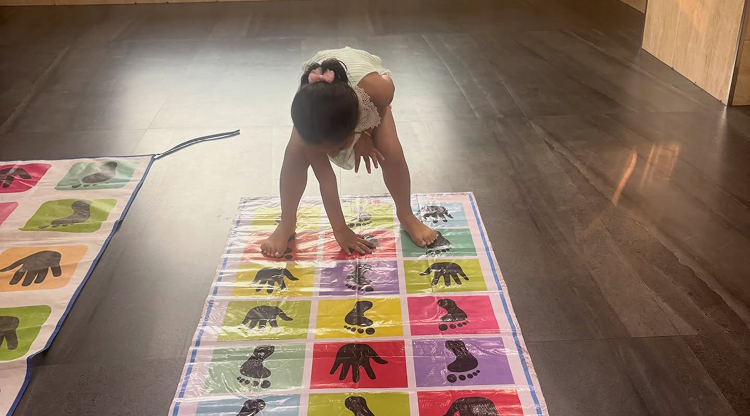
1. Hopscotch play
Hopscotch requires children to balance on one foot while planning where to land next. Parents may notice hesitation before hopping or uneven landings. This is expected. With repetition, children learn how to adjust their weight and coordinate movement with intention. Encourage steady participation rather than perfect execution.
2. Short-running games
Running games helps children understand pacing and control. Some children may run very fast and struggle to stop, while others may move cautiously. Both responses are normal. Over time, repeated exposure helps children manage speed, direction, and stopping safely, which supports classroom behaviour.
3. Balancing walks
Walking along a line or low beam strengthens posture and focus. Children often use their arms to steady themselves. This is a healthy strategy. Balance improves gradually as core strength and concentration develop together through practice.
4. Throwing and catching practice
Throwing and catching build coordination between vision and movement. Dropped catches and misdirected throws are part of learning. Encourage patience and repeated attempts rather than correction. Confidence develops when children feel safe trying again.
5. Skipping rope introduction
Early skipping focuses on rhythm rather than jumping. Swinging the rope and stepping over it helps children coordinate upper and lower body movement. Timing improves naturally with exposure, even before jumping is mastered.
6. Playground climbing
Climbing supports arm strength, coordination, and confidence. Children may pause mid-climb or change their plan. This reflects judgement, not fear. Allow children to assess their movements while remaining nearby for safety.
7. Freeze dance
Freeze dance teaches children to stop movement on cue. Some children may struggle initially. This is normal. Over time, this activity supports listening skills, impulse control, and body awareness in a playful context.
8. Simple obstacle courses
Obstacle courses encourage planning and adaptability. Children learn how to navigate space thoughtfully rather than rushing through. Observing how a child approaches obstacles offers insight into confidence and problem-solving style.
9. Balloon volleyball
Balloon play encourages reaching, jumping, and coordination without fear of impact. Children often become more willing to try movements they might avoid with heavier objects. This builds confidence gradually.
10. Gardening activities
Gardening involves lifting, digging, and carrying. These movements strengthen muscles while teaching patience and responsibility. Children may tire quickly at first. Stamina improves with gentle repetition.
Why Physical Confidence Matters Beyond Play?
Movement shapes how children experience daily life. Children who feel physically secure often settle more easily into routines and approach challenges calmly.
One of the long-term gross motor skills benefits is independence. Children who feel confident in their bodies manage everyday tasks with greater ease and self-assurance.
Alongside physical movement, carefully planned fine motor skills activities help children develop hand control, supporting early writing habits and self-care routines.
Choosing an Environment That Supports Whole-Child Growth
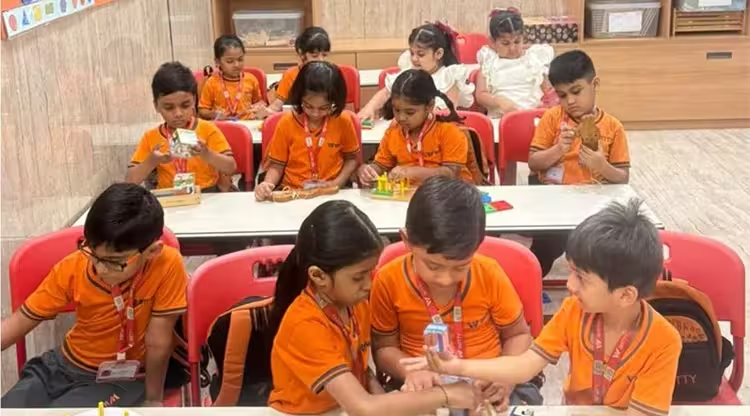
A child’s environment reinforces physical confidence. At Witty Schools, movement is woven into daily learning through structured physical education and thoughtfully designed spaces.
Parents exploring good schools in Mumbai often look for this balance between academics and well-being.
Supporting Your Child’s Journey with Witty Schools
Every jump, run, and climb contributes to your child’s confidence. At Witty Schools, one of the best schools in Malad, children learn in environments that nurture movement, curiosity, and learning.
We invite you to explore our campuses and see how holistic development becomes part of everyday school life.