Skip to content

Importance of Preschool Education: How Early Learning Shapes a Child’s Future
Parents often wonder whether preschool is genuinely important or simply an optional stage before “real school” begins. The answer lies in understanding what happens during a child’s earliest years. Preschool is not merely a place where children learn letters, numbers and rhymes. It is where they begin developing the language, independence, confidence and social skills needed for school and everyday life.
A high-quality preschool provides purposeful, age-appropriate experiences during a period of rapid development. Through play, stories, movement, conversation and exploration, children learn how to think, communicate, cooperate and manage their emotions.
Key Takeaways
Preschool education is important because it develops the cognitive, language, physical, social and emotional skills children need before entering primary school. Play-based activities help young learners communicate, solve problems, follow routines, build independence and interact confidently with others. The right preschool makes the transition to formal education more comfortable while nurturing curiosity and a positive attitude towards learning.
What Is Preschool Education?
Preschool education refers to organised early learning before a child enters formal primary school. In India, it commonly includes Playgroup, Nursery, Junior Kindergarten and Senior Kindergarten, although class names and age requirements can vary between schools.
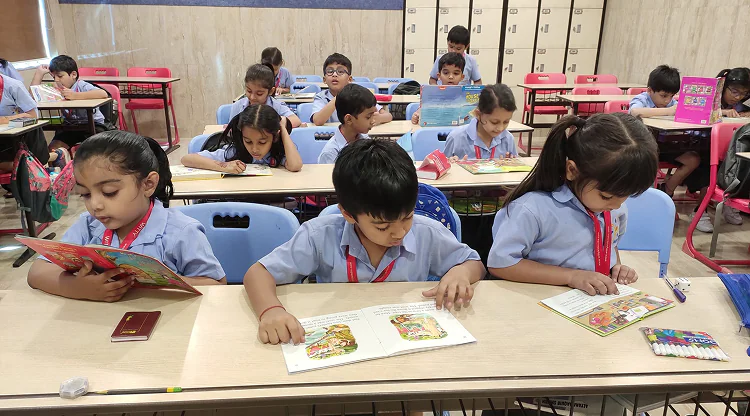
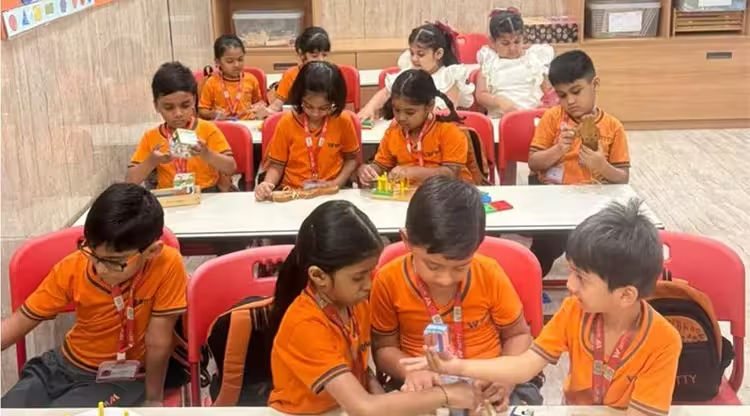
Unlike conventional academic instruction, preschool education is primarily experiential and play-based. Children learn through activities such as:
- Storytelling and rhymes
- Art, music and movement
- Building and sorting games
- Outdoor and sensory play
- Role-play and group activities
- Guided conversations and exploration
A strong preschool programme does not attempt to push primary-level academics onto younger children. Instead, it develops the foundational abilities that make future reading, writing, numeracy and classroom participation easier.
Why Is Early Childhood Education Important?
A child’s early years are a significant period of physical, cognitive, linguistic and emotional development. Experiences during this stage influence how children approach relationships, challenges and learning.
India’s National Education Policy 2020 recognises ages three to eight as the foundational stage of education. Its 5+3+3+4 structure brings early childhood care and education into the formal learning framework, highlighting the importance of age-appropriate, activity-based education.
However, simply attending preschool does not guarantee positive development. The quality of the environment matters. Children benefit most when trained educators provide responsive interactions, safe spaces, consistent routines and opportunities to learn through meaningful play.
What Are the Main Benefits of Preschool Education?
Preschool supports several connected areas of development:
| Development area | What children begin to learn |
| Cognitive development | Memory, observation, reasoning and problem-solving |
| Language development | Vocabulary, listening, expression and early literacy |
| Social development | Sharing, cooperation, turn-taking and teamwork |
| Emotional development | Confidence, patience and self-regulation |
| Physical development | Balance, movement and fine motor coordination |
| Independence | Managing belongings, making choices and following routines |
These abilities do not develop separately. For example, completing a puzzle may build concentration and spatial reasoning, while solving it with a classmate also develops communication, patience and cooperation.
How Does Preschool Develop Social and Emotional Skills?
For many children, preschool is their first regular experience in a community beyond their immediate family. They meet classmates with different personalities, preferences and ways of communicating.
Daily interactions teach children how to wait for a turn, share resources, join a group and express disagreement appropriately. Small classroom conflicts become supervised opportunities to practise empathy, negotiation and self-control.
Preschool also helps children manage separation from their parents. A predictable routine and reassuring educator can gradually make an unfamiliar environment feel secure. As children complete tasks, participate in activities and build friendships, they become more confident and independent.
These social-emotional skills are essential for school readiness. A child who can ask for help, listen to instructions and recover from a minor disappointment is better equipped to participate in a primary classroom.
How Does Preschool Improve Language and Communication?
A good preschool is a language-rich environment. Children hear new words during stories, songs, conversations and imaginative play. They also receive frequent opportunities to speak, ask questions and describe their experiences.
Storytelling introduces sequence, characters and cause-and-effect relationships. Rhymes strengthen listening and sound awareness, while group conversations teach children to listen and respond. Pretend play encourages them to use language creatively while negotiating roles and explaining ideas.
Exposure to English and other familiar languages can also support multilingual development. The objective should not be to replace the language used at home, but to help children communicate confidently across different settings.
Educators support this process by modelling clear language, asking open-ended questions and giving every child time to respond.
What Is the Role of Play-Based Learning?
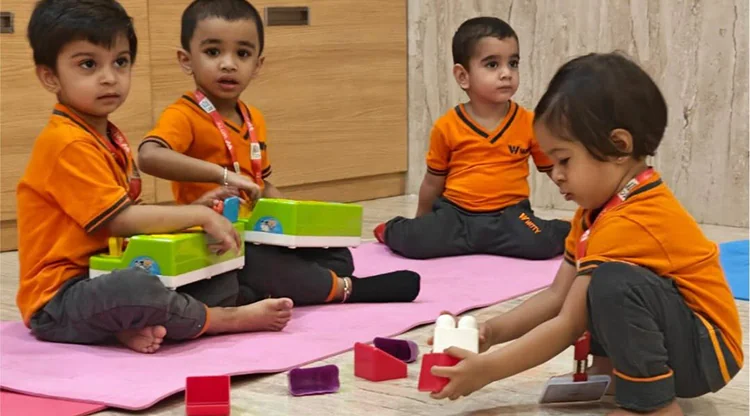
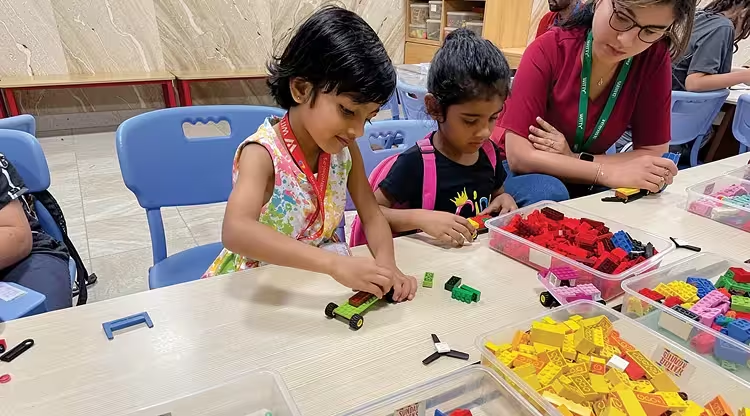
Play-based learning is structured around a simple principle: young children understand concepts more effectively when they can experience them. Play is therefore not a break from learning; it is one of the primary ways preschool children learn.
| Preschool activity | Skills supported |
| Building blocks | Early mathematics, planning and spatial awareness |
| Pretend play | Language, imagination and social understanding |
| Puzzles and sorting | Reasoning, concentration and classification |
| Art and clay | Creativity and fine motor control |
| Music and movement | Rhythm, coordination and memory |
| Outdoor games | Gross motor development and teamwork |
Effective play-based learning balances child-led exploration with thoughtful educator guidance. Teachers observe children, introduce suitable materials and ask questions that extend their thinking without controlling every decision.
How Does Preschool Prepare Children for Primary School?
School readiness is broader than knowing the alphabet or counting to a particular number. It includes being able to participate in routines, communicate needs, interact with peers and approach unfamiliar tasks with confidence.
Preschool prepares children by helping them:
- Follow simple, age-appropriate instructions
- Move between activities and routines
- Concentrate for gradually longer periods
- Use classroom materials responsibly
- Develop early literacy and numeracy concepts
- Manage basic self-care tasks
- Work and play alongside other children
- Ask questions and seek help
These experiences make the transition to Grade 1 less intimidating. Children enter formal school with an understanding of how a classroom works and greater confidence in their ability to learn.
How Can Parents Support Early Learning at Home?
Parents do not need expensive resources or formal worksheets to extend preschool learning. Simple everyday interactions are often more valuable.
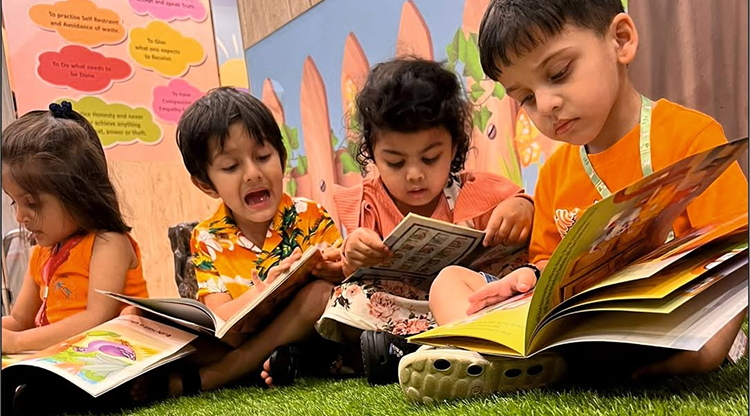
Read aloud daily and discuss the pictures, characters and events. Invite children to sort laundry, count fruit or help set the table. Encourage drawing, building, singing and outdoor play. Give them enough time to dress, eat and organise simple belongings independently.
Conversations are equally important. Asking “What did you enjoy today?” or “How could we solve this?” encourages children to explain their thoughts. Parents can also support emotional development by naming feelings and demonstrating calm ways to handle frustration.
Screens should not replace conversation, physical activity, sleep or hands-on exploration. When digital media is used, selecting age-appropriate content and engaging with the child makes the experience more meaningful.
How Should Parents Choose a Good Preschool?
Parents searching for a good preschool near them should look beyond colourful classrooms and promotional claims. During a campus visit, ask about:
- The school’s teaching and play-based learning approach
- Teacher qualifications and the adult-child ratio
- Safety, hygiene and child-protection procedures
- Daily routines and outdoor play
- Support for separation anxiety
- Parent communication and progress updates
- Toilet, meal, rest and medical arrangements
- The transition from preschool to primary school
Observe how educators speak to children. A nurturing preschool should feel welcoming, purposeful and calm, with children actively engaged rather than simply following instructions.
Explore Preschool Education at Witty
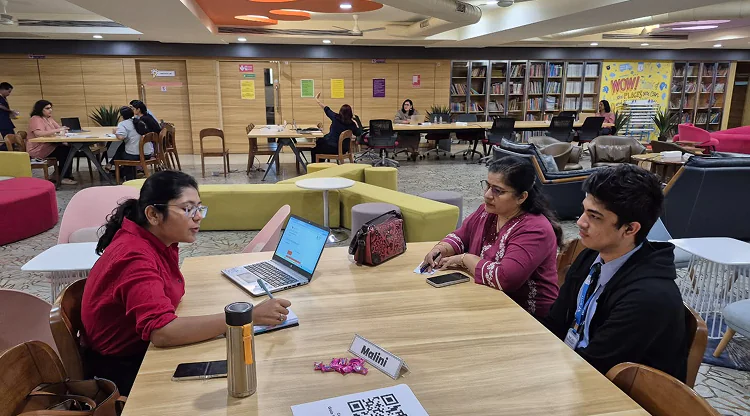
Witty’s early-years programmes focus on joyful, child-centred learning that develops language, numeracy, creativity, confidence and life readiness. Families can explore the programme at the preschool in Malad West, Witty Kids Goregaon East or Witty Kids Borivali West.
Programme availability and admission criteria may differ by campus. Parents can review Witty’s preschool admission process and schedule a campus visit to experience the classrooms, meet educators and determine whether the learning environment suits their child.
Conclusion
The importance of preschool education extends far beyond early academics. Preschool helps children communicate, cooperate, regulate emotions, solve problems and become increasingly independent. It also introduces classroom routines and foundational concepts through experiences that remain appropriate for a young child’s developmental stage.
The best preschool is not necessarily the one that promises the earliest reading or most worksheets. It is one where children feel safe, respected and excited to explore. By choosing a nurturing programme and supporting learning through everyday experiences at home, parents can give their children a confident and joyful start.
Frequently Asked Questions
What is the right age to start preschool?
Children commonly begin preschool between two and three years of age, but readiness and eligibility criteria vary. Parents should consider communication, independence and comfort with short separations alongside age.
Is preschool necessary before Grade 1?
Preschool is not the only route to school readiness, but a quality programme provides structured opportunities to develop language, social skills, independence and familiarity with classroom routines.
What should children learn in preschool?
Children should develop early communication, numeracy, motor, social and emotional abilities through play and exploration. Preschool should prioritise foundational development rather than formal academic pressure.
How can parents tell whether a preschool is good?
Look for responsive educators, engaged children, safe facilities, purposeful play, clear routines and transparent parent communication. Visiting during a regular school day can provide valuable insight.
How does play help children learn?
Play allows children to experiment, make decisions, solve problems and communicate. Well-designed play experiences build academic foundations while supporting physical, creative and social development.