Skip to content

Key Takeaways
- The IGCSE curriculum is recognised by universities and employers in over 160 countries.
- It builds critical thinking, independent learning and genuine subject flexibility.
- Assessment blends coursework, projects and exams rather than relying on memorisation alone.
- IGCSE lays a strong foundation for A Levels, the IB Diploma and global career paths.
- Witty Schools delivers IGCSE education in Mumbai with a focus on conceptual, hands-on learning.
Picking the right board for your child’s secondary years can feel like reading a menu with too many options and too little time. If you’re a parent weighing up curricula, chances are you’ve come across the term IGCSE curriculum more than once. But what does it actually offer beyond the buzzword? This guide breaks down ten real, practical benefits of IGCSE, so you can make a confident, informed choice rather than a guess.
What is the IGCSE Curriculum?
The International General Certificate of Secondary Education, widely known as the IGCSE curriculum, is an internationally recognised qualification developed by Cambridge Assessment International Education, part of the University of Cambridge. Designed for students aged fourteen to sixteen, it spans two years and prepares them for A Levels, the IB Diploma or equivalent pre-university programmes. Unlike boards that lean heavily on rote learning, IGCSE structures its subjects around understanding, application and enquiry.
- Taught and recognised across more than 160 countries
- Combines written exams, coursework and practical assessment
- Covers Languages, Sciences, Humanities, Mathematics and Creative subjects
- Graded on the A* to G scale, with some boards using a 9 to 1 system
Why Parents Are Choosing IGCSE Education
More families in Mumbai are actively choosing IGCSE education over some traditional boards, and the reasons go beyond prestige. Parents want a curriculum that reflects how universities and employers actually evaluate students today, through analytical ability, communication and adaptability, rather than marks alone.
- A recognised pathway for students who may study abroad later
- Encourages children to ask questions rather than simply memorise answers
- Offers subject flexibility suited to different strengths and interests
- Builds a well-rounded skill set valued by top universities worldwide
Benefit 1: Internationally Recognized Qualification
One of the strongest reasons families choose the IGCSE curriculum is its international standing. Universities and employers across more than 160 countries recognise IGCSE as equivalent to their own national secondary certificates. For a Mumbai family considering universities in the UK, Canada, Australia or closer to home, a Class 10 IGCSE certificate carries weight wherever your child’s education eventually takes them.
Benefit 2: Strong Foundation for Higher Education
IGCSE is deliberately designed as a stepping stone. It prepares students for A Levels, the IB Diploma or other pre-university courses by introducing early research, structured writing and exam technique. Students who complete IGCSE often find the jump to senior secondary study less daunting, since they have already practised that kind of analytical thinking.
Benefit 3: Wide Range of Subject Choices
Few boards offer the breadth of subject choice that IGCSE education provides. Students can combine Sciences, Humanities, Languages, Mathematics and Creative subjects to match their genuine interests rather than a fixed template. This flexibility helps children discover their strengths early, whether that’s a flair for Economics or a passion for Computer Science.
| Subject Group | Example Subjects |
| Sciences | Physics, Chemistry, Biology |
| Humanities | History, Geography, Economics |
| Languages | English, Hindi, French, Spanish |
| Mathematics | Mathematics, Additional Mathematics |
| Creative & Technical | Art & Design, Computer Science, Business Studies |
Benefit 4: Focus on Conceptual Understanding
Rather than rewarding memorisation, IGCSE assessments test whether students genuinely understand a concept and can apply it to unfamiliar situations. A Mathematics question is less likely to ask a student to repeat a formula and more likely to ask them to use it in solving a real-world problem. This builds deeper learning that lasts well beyond the exam hall.
Benefit 5: Development of Critical Thinking Skills
Critical thinking runs through the entire IGCSE curriculum, well beyond subjects like Global Perspectives. Students regularly evaluate evidence, compare viewpoints and construct reasoned arguments, skills that serve them long after school ends. In a world where information is abundant but sound judgement is rarer, this training gives students a genuine edge, both academically and in everyday decisions.
Benefit 6: Encourages Independent Learning
IGCSE places real responsibility on students to manage their own learning, from planning coursework to revising for subjects with different demands. Teachers guide rather than spoon-feed, pushing students to develop time management and self-discipline early. Parents often notice this shift at home too, as children grow more comfortable owning their own progress.
Benefit 7: Balanced Academic and Practical Learning
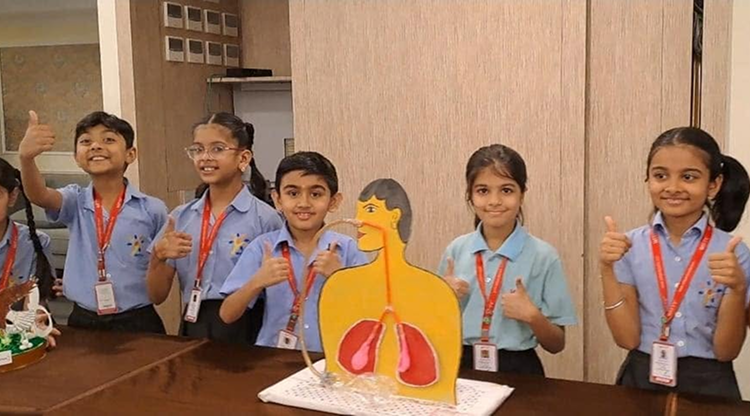
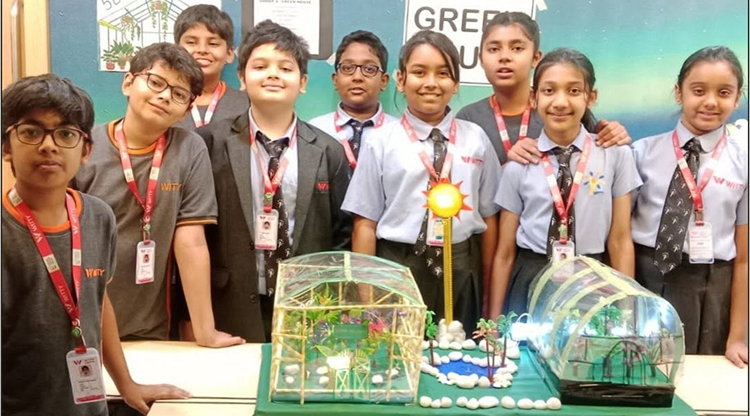
The IGCSE curriculum doesn’t confine learning to textbooks and theory. Practical components, projects and coursework sit alongside written exams, giving students the chance to apply what they’ve learned in tangible ways. A Science student might run experiments, while a Business Studies student works through a real case study. This balance keeps learning engaging rather than abstract.
Benefit 8: Flexible Assessment Methods
Assessment under IGCSE isn’t a single high-pressure exam at the end of two years. It’s spread across different formats, which suits a wider range of learning styles and reduces the weight placed on any one test.
- Written examinations across most subjects
- Coursework and project-based assessment in select subjects
- Practical tests for Sciences and technical subjects
- Oral assessments for Languages
Benefit 9: Builds Global Perspectives and Cultural Awareness
Because IGCSE is taught in schools across more than 160 countries, its content carries an international outlook rather than a single national lens. Students engage with global issues, diverse case studies and perspectives beyond their immediate surroundings. For families raising children in a connected world, this cultural awareness matters as much as academic results.
Benefit 10: Prepares Students for Future Careers
The skills IGCSE builds, from research to independent problem-solving, are exactly what employers look for once students enter the workforce. Combined with its international recognition, the IGCSE curriculum gives students a head start whether they pursue careers in India or abroad, an education built with the future in mind.
Key Considerations Before Choosing IGCSE
IGCSE isn’t the only good option, and it isn’t automatically the right fit for every child. Before deciding, it helps to weigh a few practical factors alongside the academic ones.
- Learning style: independent learners often thrive, though some children need more structure
- Long-term plans: check how IGCSE aligns with your child’s likely path after Class 10
- School quality: the curriculum is only as strong as the teaching behind it
- Cost: when comparing best schools in Mumbai with fees that vary widely, check what’s included beyond tuition
- Continuity: consider whether your child may need to switch boards or schools later
Why Witty Schools Is the Right Choice for IGCSE
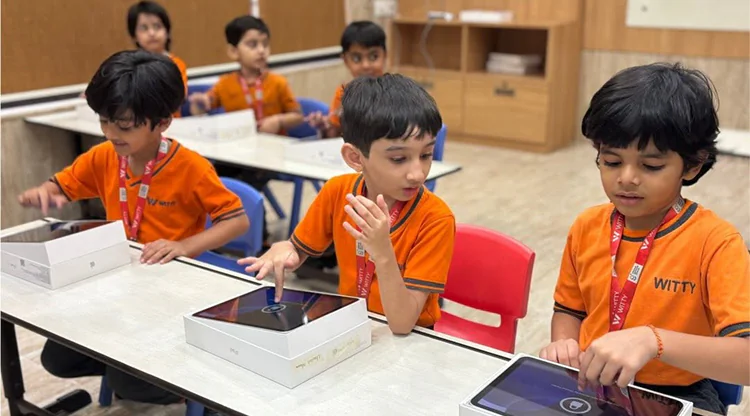
At Witty Schools, we don’t teach the IGCSE curriculum as a checklist, we deliver it through conceptual understanding, hands-on learning and genuine attention to each child’s growth. Our teachers bring IGCSE’s global standards to life in the classroom while staying responsive to individual needs. For parents searching among the best IGCSE schools in Mumbai, Witty Schools offers depth and real-world readiness.
Conclusion and Next Steps
Choosing the right curriculum is one of the bigger decisions you’ll make for your child’s education, and IGCSE makes a strong case on almost every front, from global recognition to skills that last well beyond school.
If you’re exploring IGCSE schools in Mumbai, we’d love to show you around. Get in touch with Witty Schools today to book a campus visit or speak with our admissions team.
Frequently Asked Questions
1. What age group is the IGCSE curriculum designed for?
IGCSE is designed for students aged fourteen to sixteen, typically covering Years 9 and 10 before students move on to A Levels, the IB Diploma or equivalent programmes.
2. Is IGCSE harder than other boards like ICSE or CBSE?
IGCSE isn’t necessarily harder, but it does emphasise application and analysis over memorisation, which can feel different from boards that rely more heavily on textbook-based learning.
3. How does IGCSE prepare students for universities abroad?
Because IGCSE is recognised by universities and employers in over 160 countries, students can apply to international institutions without needing additional qualification conversions.