Skip to content

Choosing a school board is an important decision because it influences what children learn, how they are assessed and the skills they develop. Parents often compare state boards, CBSE, Cambridge and ICSE before selecting the right academic pathway.
The ICSE board curriculum is widely recognised for its detailed subject coverage, strong emphasis on English and a combination of theoretical and practical learning. Its broad approach can help students develop the communication, analytical and problem-solving skills required for higher education and future careers.
Key Takeaways
The ICSE board curriculum prepares students for future success by developing strong subject knowledge, English communication, analytical thinking and practical application. Through detailed coursework, projects, laboratory activities and internal assessments, students learn to understand concepts, present ideas clearly and work independently. Its effectiveness ultimately depends on how well the school implements the curriculum and supports each learner.
What Is the ICSE Board Curriculum?
The Indian Certificate of Secondary Education, or ICSE, is the Class 10 examination conducted by the Council for the Indian School Certificate Examinations. Schools commonly use the term “ICSE curriculum” to describe the broader CISCE-aligned educational pathway leading to this examination.
The curriculum covers languages, mathematics, science, social studies and other academic or skill-based subjects. Depending on the school and grade, students may also study subjects such as computer applications, commercial studies, economics, art or physical education.
Rather than viewing subjects in isolation, a well-implemented ICSE programme encourages students to understand concepts, communicate what they have learned and apply their knowledge to different situations.
Why Is the ICSE Curriculum Known for Academic Depth?
One of the principal benefits of the ICSE board curriculum is its comprehensive treatment of subjects. Students are encouraged to understand the reasoning behind a concept instead of remembering information solely for an examination.
In science, for example, learners study theories while also observing processes through experiments and practical activities. In history and geography, they may interpret events, maps and evidence rather than simply recall dates. Language learning includes grammar, composition, comprehension and literature.
This depth can give students a strong academic foundation. However, deeper coverage does not need to mean excessive pressure. Experienced teachers can divide complex topics into manageable lessons, use examples from everyday life and provide differentiated guidance according to each child’s learning needs.
Strong Emphasis on English and Communication
English language development is a prominent feature of the curriculum. Students generally receive regular exposure to comprehension, creative and formal writing, grammar, vocabulary and literature.
These activities can help children learn how to structure their thoughts and communicate them clearly. Studying literature also introduces students to different characters, cultures, ideas and perspectives, strengthening interpretation and empathy.
Effective communication has value far beyond English examinations. Students use it when presenting projects, participating in debates, writing reports and collaborating with classmates. These abilities can later support university applications, interviews and professional communication.
Parents should nevertheless evaluate how a school teaches communication. A strong programme should give students opportunities to speak, listen, write and present—not merely complete grammar exercises.
Balanced Knowledge Across Core Subjects
The ICSE syllabus gives substantial attention to languages, mathematics, science and the humanities. This breadth is valuable for children who have not yet decided which academic or professional pathway they want to pursue.
A student interested in engineering needs mathematical and scientific understanding, but also communication and research skills. A future writer, designer or entrepreneur similarly benefits from numeracy, technology awareness and analytical reasoning.
Exposure to multiple disciplines helps students recognise connections between subjects. A sustainability project, for instance, might combine environmental science, geography, mathematics, research and presentation skills. Such learning demonstrates how knowledge is used outside the classroom.
Subject combinations and optional courses can differ between schools, so parents should confirm which ICSE subjects are available at the campus they are considering.
Critical Thinking and Practical Application
The ICSE approach can encourage students to ask questions, compare information and explain how they concluded. These practices support critical thinking because learners must engage with information rather than reproduce it mechanically.
Practical work reinforces this process. Laboratory experiments, field-based observations, research tasks and classroom projects allow students to test concepts and connect theory with experience.
A science experiment may require a learner to form a hypothesis, record observations and interpret results. A geography project may involve collecting data, creating charts and drawing conclusions. Each activity combines subject knowledge with planning, accuracy and reasoning.
These capabilities are increasingly valuable in higher education and employment, where individuals are expected to assess information, solve unfamiliar problems and justify their decisions.
Projects and Internal Assessments
Another important feature of the ICSE educational experience is the use of projects, practical work and internal assessment alongside written examinations. The exact assessment structure varies according to the subject and current CISCE regulations.
Projects help teachers evaluate abilities that may not be fully visible in a timed examination. These include research, organisation, creativity, presentation and the application of knowledge.
Students also learn how to manage longer assignments. They must interpret instructions, divide the work into stages, meet deadlines and review the final result. These habits prepare them for advanced coursework and professional responsibilities.
Schools should ensure that projects remain meaningful learning experiences completed substantially by students. Clear guidance and constructive feedback are more beneficial than excessive adult involvement or an exclusive focus on presentation.
Independent Learning and Time Management
Because the curriculum is detailed and assessments can include several components, students gradually learn to organise their responsibilities. They may need to balance daily lessons, revision, projects, practical work and co-curricular commitments.
With appropriate guidance, this process builds time management and independent learning. Students learn to maintain notes, identify difficult topics, ask for assistance and prepare steadily rather than depend on last-minute study.
Independent learning does not mean leaving children to manage everything alone. Teachers and parents should initially provide structure through realistic schedules, regular feedback and clear priorities. Support can gradually decrease as the learner becomes more confident.
Academics and Co-Curricular Development
The curriculum provides a strong academic framework, but a child’s overall educational experience is shaped by the school implementing it. Sport, music, visual arts, theatre, clubs, community initiatives and leadership opportunities should complement classroom learning.
Participation in these activities can develop teamwork, resilience, creativity and self-confidence. It also gives children opportunities to discover interests that may not emerge through conventional academic lessons.
Parents should therefore look beyond the name of the board. They should examine whether the school protects time for physical activity, provides meaningful co-curricular opportunities and maintains a healthy balance between achievement and student well-being.
How Should Parents Evaluate an ICSE School?
Before choosing a school, parents should ask:
- How are complex concepts explained to students with different learning needs?
- Which subjects and optional courses are available?
- How frequently are projects and practical activities conducted?
- How does the school monitor academic progress without creating unnecessary pressure?
- What opportunities exist for sport, art, leadership and public speaking?
- How are parents informed about their child’s development?
- What academic or emotional support is available when a student experiences difficulty?
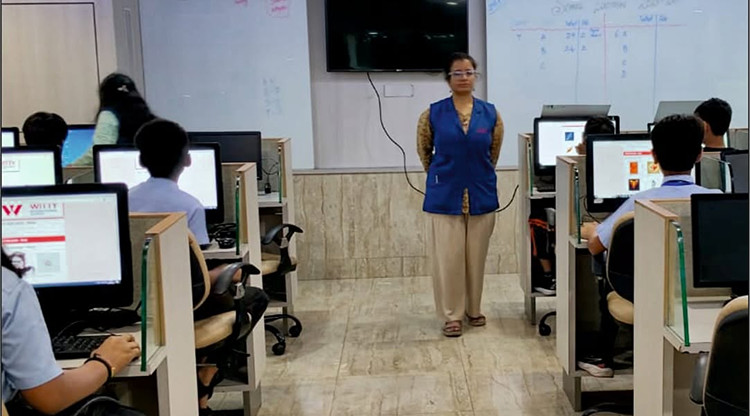
A campus visit can also reveal how teachers interact with students, whether classrooms encourage questions and how confidently children participate in learning.
How Witty International School Supports ICSE Learning
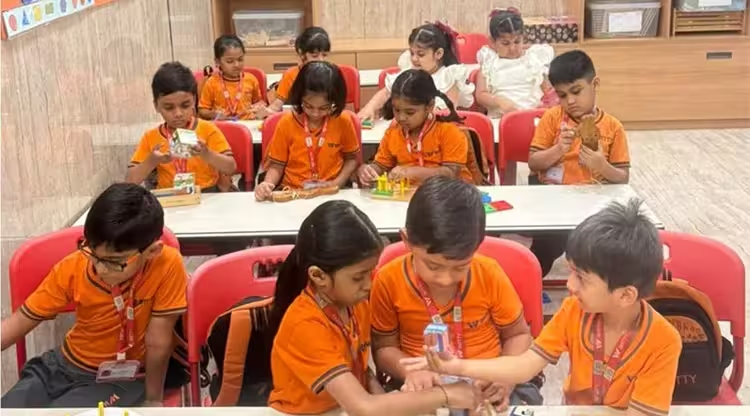
At Witty International School, the ICSE framework is supported through classroom instruction, experiential activities and opportunities for holistic development. The objective is to help students build subject knowledge while strengthening communication, creativity, collaboration and confidence.
Parents exploring schools in Mumbai can learn more about the academic pathways and facilities at Witty International School, Borivali and Witty International School, Malad. Families with younger children may also explore Witty Kids, Goregaon East.
Because programmes and grade availability may vary by campus, parents should review the relevant campus information and speak with its admissions team before applying.
Conclusion
The ICSE board curriculum can provide a strong foundation in languages, mathematics, science and the humanities while developing communication, research and analytical skills. Projects, practical activities and internal assessments further encourage students to apply knowledge and become increasingly independent.
The board, however, is only one part of a child’s education. Skilled teachers, responsive academic support, co-curricular opportunities and a positive school environment determine how effectively its advantages reach each student.
Parents considering an ICSE education should select a school that combines academic rigour with curiosity, creativity and well-being. A campus visit to Witty International School can help families understand how its curriculum is delivered and whether its learning environment suits their child.
Frequently Asked Questions
Is the ICSE curriculum difficult?
The curriculum is comprehensive, but it should not be overwhelming when lessons are well structured. Regular study, conceptual understanding and timely teacher support help students manage it confidently.
What are the main advantages of the ICSE board?
Its main advantages include detailed subject coverage, strong English education, practical learning, project work and opportunities to develop research, communication and analytical abilities.
Does ICSE focus only on academics?
ICSE provides the academic framework, while each school determines the extent and quality of its sports, arts, clubs and other co-curricular programmes. Parents should evaluate both areas before enrolling their child.
Is ICSE suitable for competitive examinations?
ICSE can build strong conceptual and analytical foundations. Students preparing for a specific competitive examination may still require targeted practice that aligns with the examination’s format and syllabus.
How can parents choose the right ICSE school?
Parents should compare the quality of teaching, subject choices, assessment practices, student support, class environment, commute, safety, and co-curricular opportunities. Visiting the campus and speaking with educators can make the decision more informed.